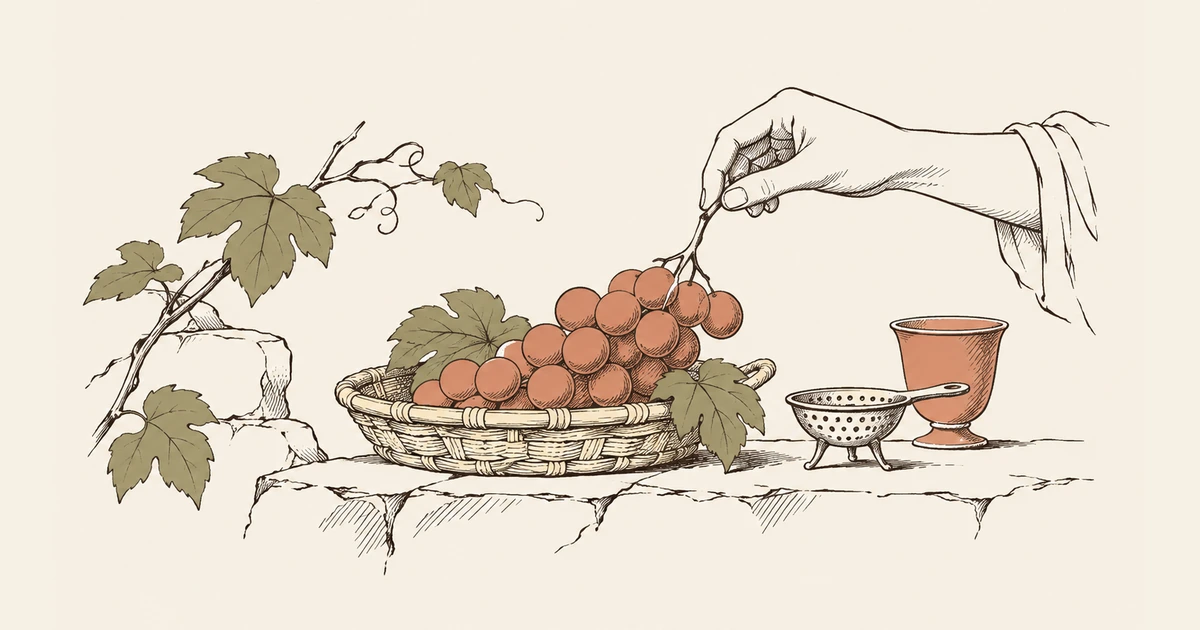
“Carpe diem” is usually translated “seize the day” and used to mean: take the big risk now. The Latin verb is closer to “pluck” or “harvest,” and in Horace’s poem the advice is quieter: stop asking how long you have, do today’s small tasks, and enjoy what is ripe. [1] [2]
The line, exactly
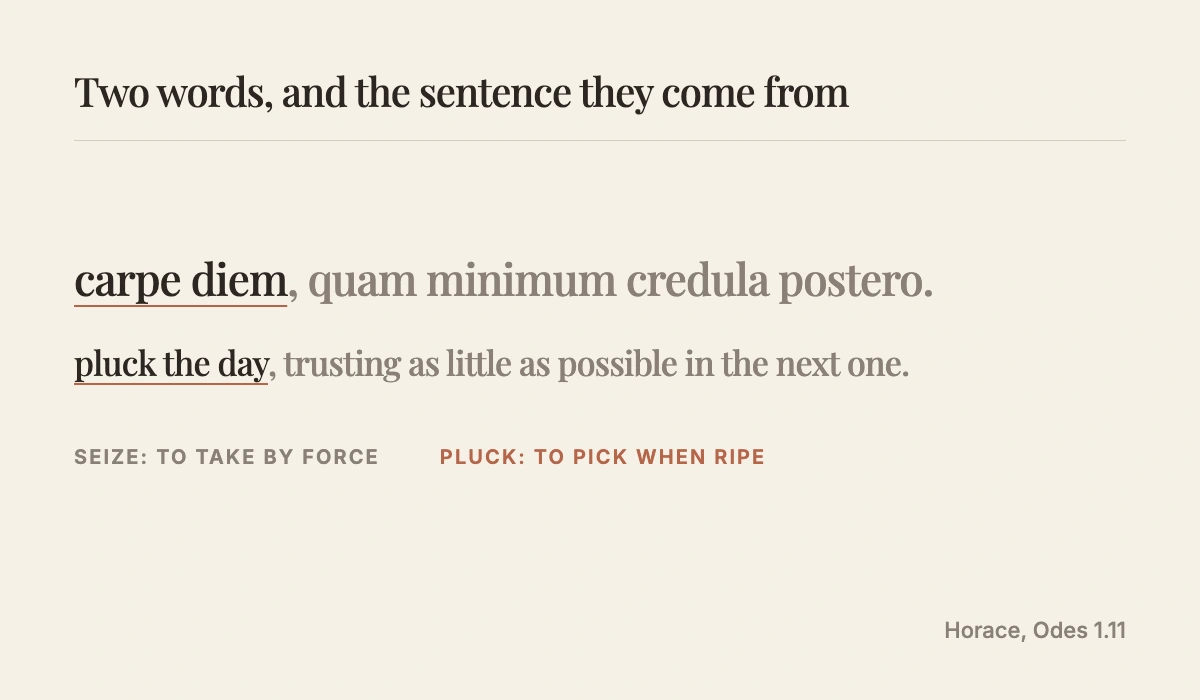
carpe diem, quam minimum credula postero.
Horace, Odes 1.11, the final line, written around 23 BCE. A plain translation: “pluck the day, trusting as little as possible in the next one.” The famous two words are the first half of a sentence. [1]
Where it sits in the poem
The poem is eight lines long and addressed to a woman called Leuconoe. It opens by telling her not to ask what end the gods have given to her or to the poet, and not to try “Babylonian calculations,” meaning astrology. Better, it says, to bear whatever comes, whether this winter is one of many or the last. [1]
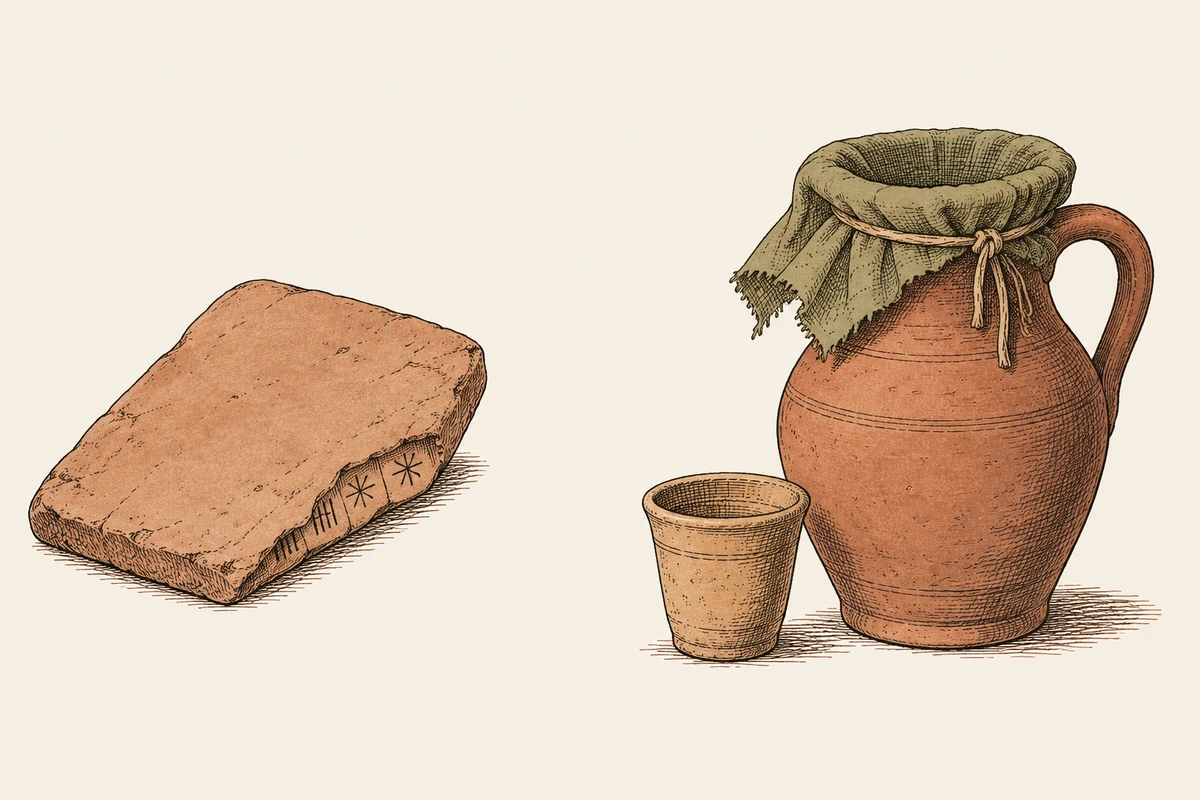
Then come the instructions: be sensible, strain the wine, and cut long hopes down to fit a short span. “While we are speaking, envious time will have fled.” Only after all that does Horace say carpe diem. [1]
What “carpe” means
Carpere is a word for picking: fruit, flowers, grain. The picture is of taking something at the moment it is ready, by hand. Chi Luu, drawing on the Latin scholar Maria S. Marsilio, describes “plucking the day” as “a far gentler, more sensual image than the rather forceful and even violent concept of seizing the moment.” [2]
The domestic details matter too. Straining wine is a household chore. The poem’s idea of living well today is ordinary and close at hand.
How it is usually used
Today the phrase tends to mean: act boldly, quit the job, book the flight, because life is short. Horace agrees that life is short. His conclusion is different. Because you cannot know the future, stop trying to bargain with it, and give your attention to the present. Luu notes that the modern “seize” reading can turn into an urge to “snatch at time and consume it before it’s gone.” [2]
Should you still quote it?
Our view: yes, and “pluck the day” is worth keeping in mind when you do. It asks less of you than “seize.” You do not have to transform your life by evening. You have to notice what is ripe.