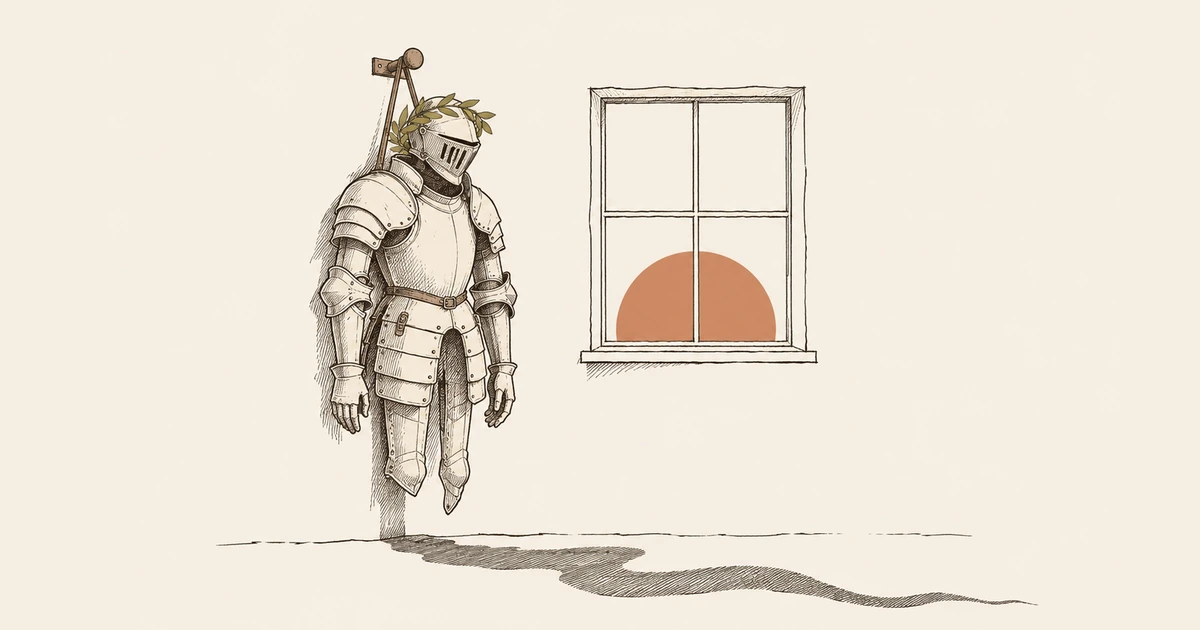
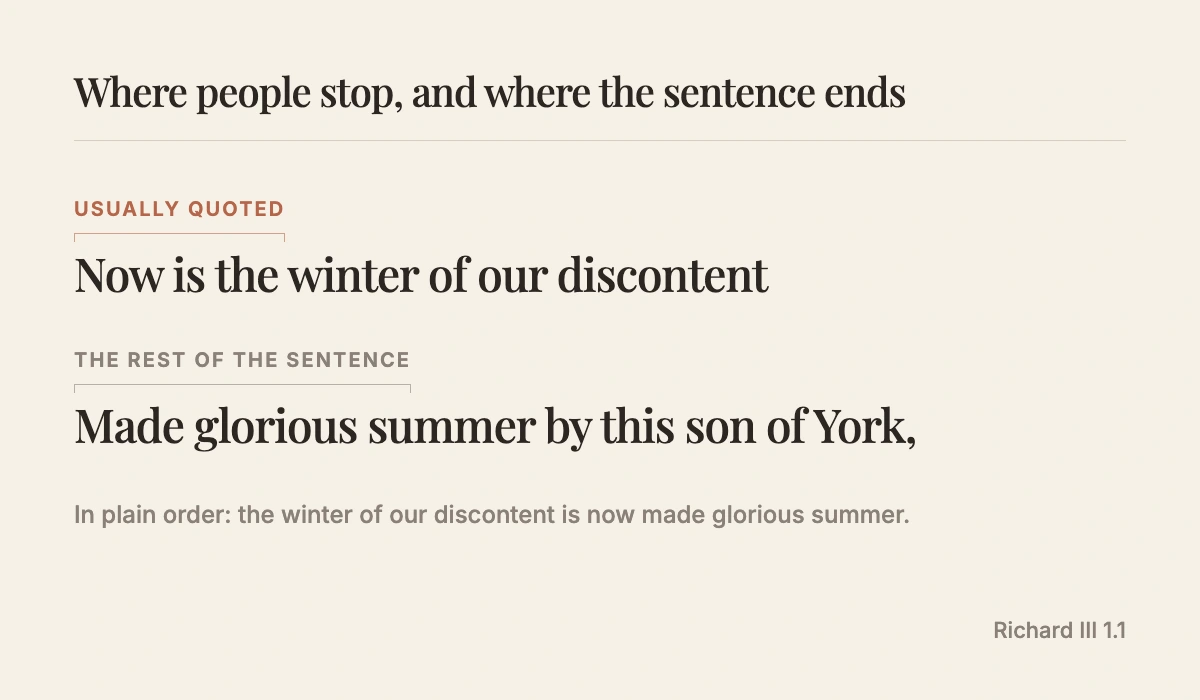
“Now is the winter of our discontent” is usually quoted to mean that bad times have arrived. The sentence runs on into the next line, and finished, it says the opposite: the winter has been turned to summer. The speaker is Richard, Duke of Gloucester, and peace is exactly what he resents. [1]
The line, exactly
Now is the winter of our discontent
Made glorious summer by this son of York,
And all the clouds that loured upon our house
In the deep bosom of the ocean buried.
William Shakespeare, Richard III, Act 1, scene 1. These are the first words of the play, spoken by Richard alone on stage. [1]
The verb is “is made.” Put in modern order: the winter of our discontent is now made glorious summer. The first line is half a statement, and the half that is usually quoted points the wrong way.
Where it sits in the play
The long wars between the houses of York and Lancaster have ended with York on top. Richard’s brother is now King Edward IV. He is “this son of York,” with a pun on “sun”: the sun was Edward’s emblem, and it is the sun that makes summer. [1]
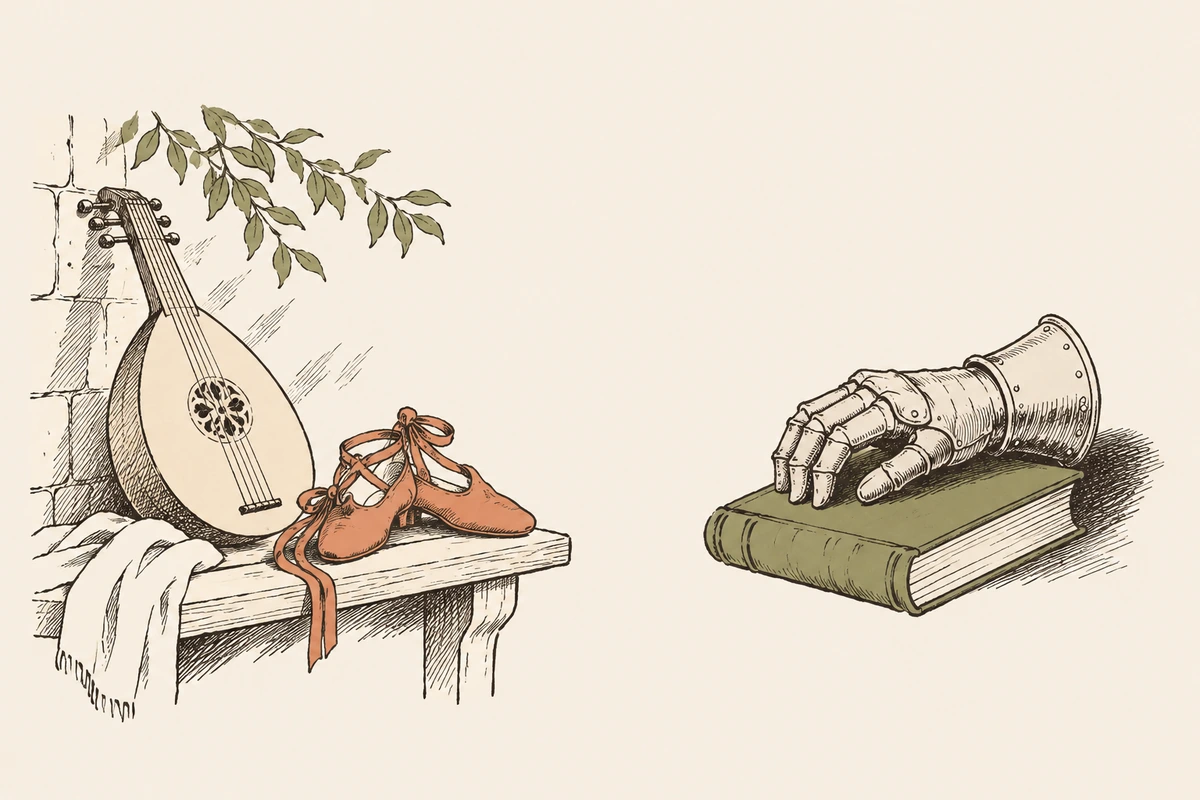
For a dozen lines Richard describes the peace. Armor is hung up as monuments, stern alarms have become merry meetings, and war now “capers nimbly in a lady’s chamber.” Then he turns. He is, he says, not made for such times, and has no delight to pass away the hours. “And therefore, since I cannot prove a lover / To entertain these fair well-spoken days, / I am determinèd to prove a villain.” [1]
What it means there
The opening is a man describing good news with his teeth clenched. Everyone else’s winter is over. Richard’s discontent is just beginning, and he is about to make it everyone’s problem. The audience is let in on that from the first sentence.
How it is usually used
The first line alone has become a stock phrase for a bleak season: strikes, shortages, a bad run of news. In Britain the winter of 1978 to 1979 is still known as the Winter of Discontent, and John Steinbeck borrowed the phrase for the title of his last novel. In each case “now is the winter” is taken as a complete thought. In the play it is the set-up for the turn.
Should you still quote it?
Our view: yes, and it is better whole. The two lines together describe something people know well: relief in public and resentment in private. Quoting only the first loses the turn that makes it Shakespeare.