“To thine own self be true” is usually quoted as advice to be authentic. In Hamlet it is the last item in a list of maxims a father recites to his departing son, and the father is Polonius, who goes on to send a spy after that same son. The line is real and the wording is right. What changes when you read it in place is how much weight it can bear. [1]
The line, exactly
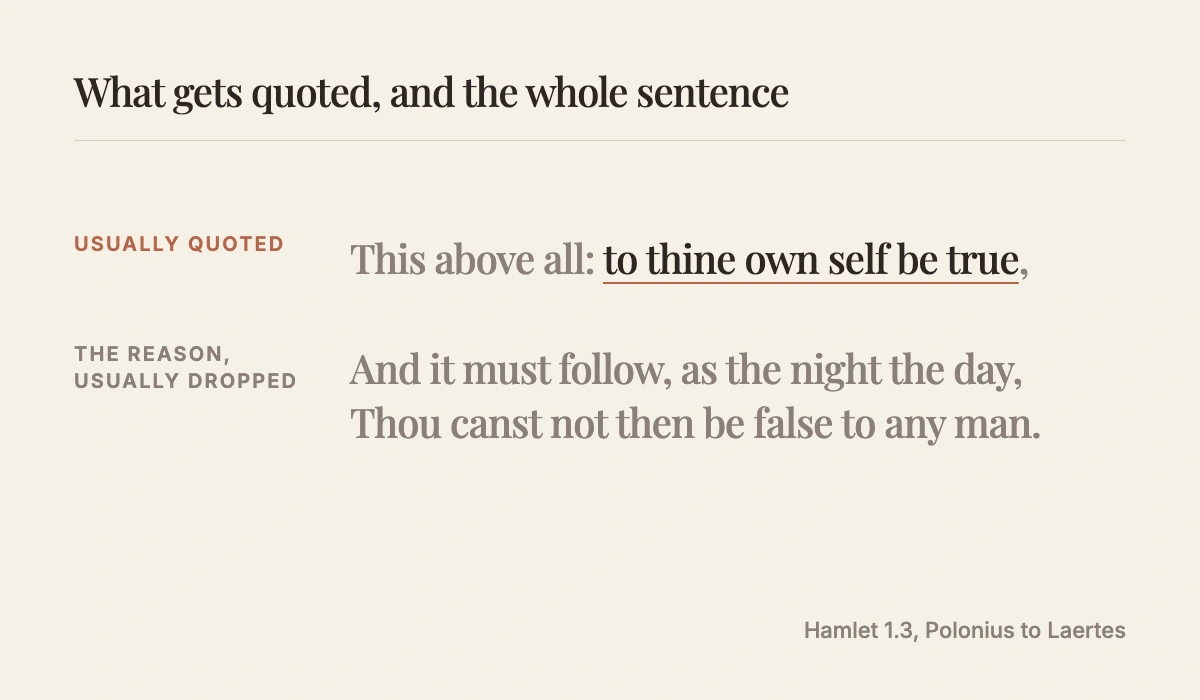
This above all: to thine own self be true,
And it must follow, as the night the day,
Thou canst not then be false to any man.
William Shakespeare, Hamlet, Act 1, scene 3. Polonius is speaking to his son Laertes. [1]
Notice that it is one sentence in three lines. The part people quote is the first half. The second half gives the reason: be true to yourself, and you will not be false to anyone else.
Where it sits in the play
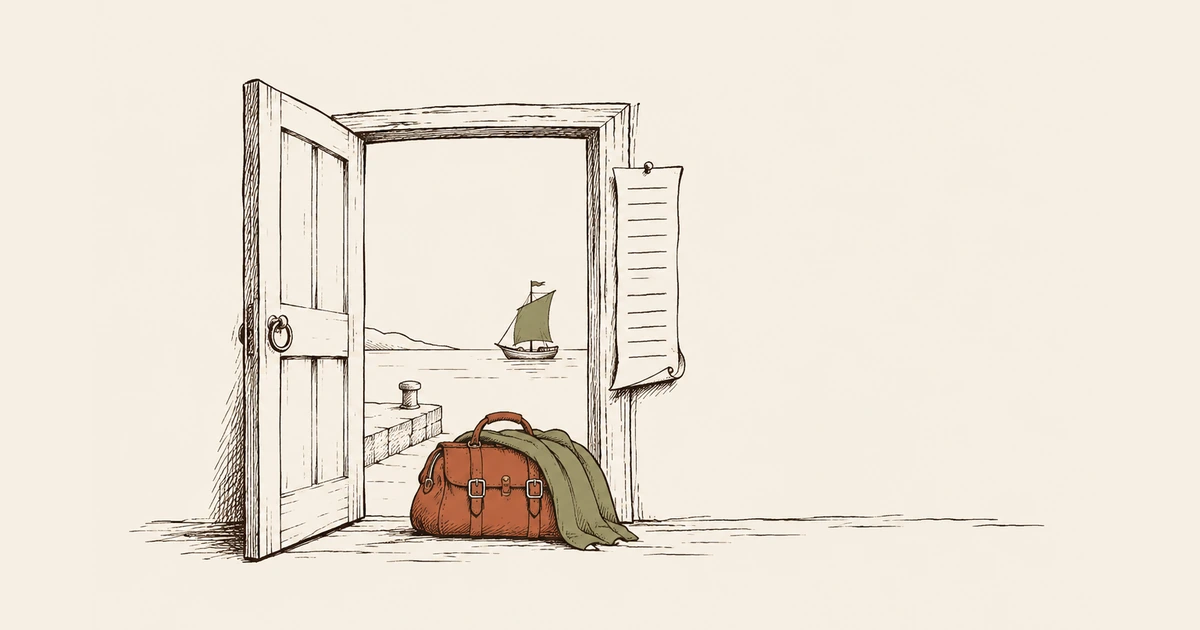
Laertes is about to sail for France. His father stops him at the door and delivers a run of short rules for a young man abroad: keep your thoughts to yourself, hold on to proven friends, listen more than you speak, dress well but not gaudily, and “neither a borrower nor a lender be.” “To thine own self be true” comes last, introduced as the most important. [1]
A few scenes later, Polonius sends his servant Reynaldo to Paris to find out how Laertes is behaving. He tells Reynaldo to hint at invented faults when talking to Laertes’s acquaintances and see what they confirm, and he is pleased with the method: “Your bait of falsehood take this carp of truth.” [2]
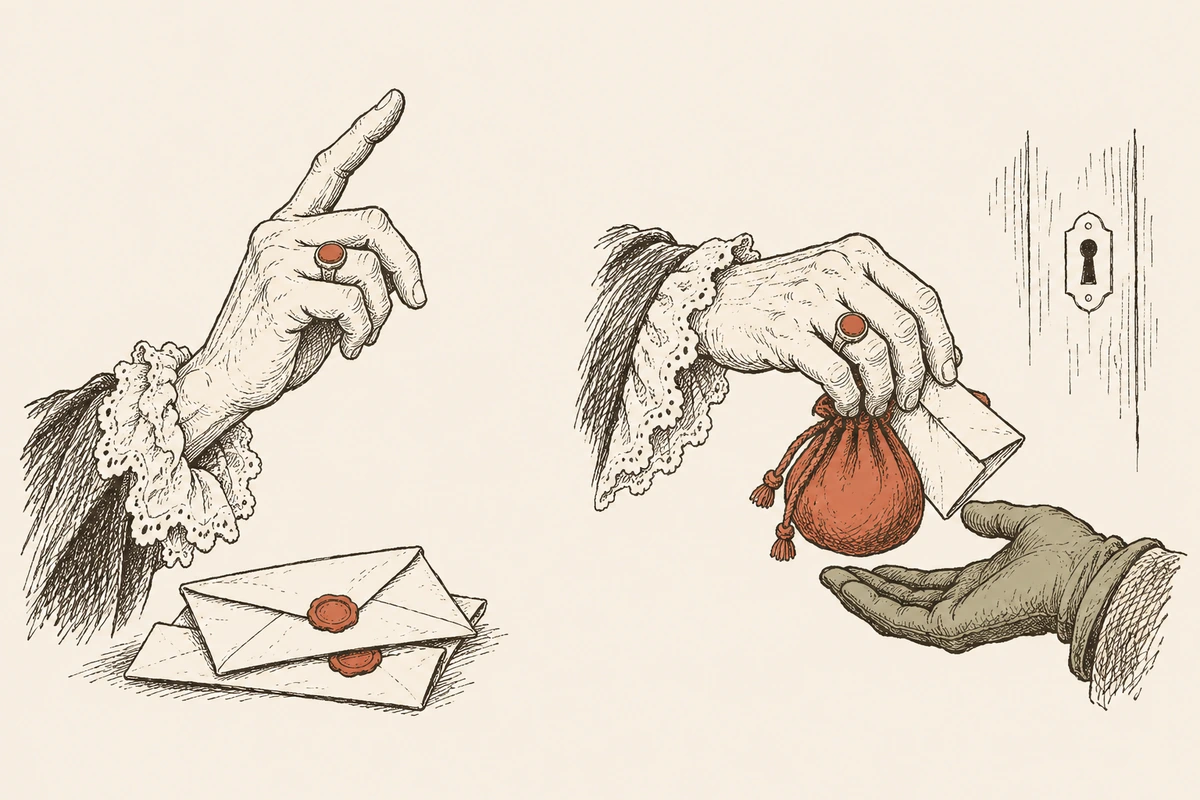
So the man who has just told his son he cannot be false to any man arranges for falsehoods to be spread about him. Hamlet’s own verdict on Polonius, after a conversation with him, is “These tedious old fools!” [3]
What it means there
In the speech, the line is practical. It closes a list about managing money, friends and reputation, and it reads as: be consistent and look to your own standing, and you will deal straight with others as a result. It is closer to “be reliable” than to “follow your heart.”
How seriously Shakespeare means us to take it is a real disagreement. Many modern readers and productions treat the speech as a string of worn platitudes from a meddling courtier, undercut by the spying that follows. Other scholars point out that advice of this kind was conventional and respected: Reina Green argues that Shakespeare’s audience may have seen “a wise father dispensing conventional, albeit ineffective, advice,” while also noting that Polonius uses his children much as he uses his spies. Both readings are in circulation, and the play supports either. [4]
How it is usually used
On graduation cards, in speeches and in self-help writing, the line means: know who you are and do not pretend to be someone else. That is a good thought, and nothing in the words forbids it. It is a newer idea than the one in the speech, and it drops both the second half of the sentence and the speaker.
Should you still quote it?
Our view: yes, with open eyes. The sentence is well made, which is why it has lasted four centuries. If you quote it, quote all three lines, so the reason travels with the advice. And it is worth knowing that Shakespeare gave his most quotable piece of wisdom to a character who does not live by it. That is a small lesson of its own about advice.