“The Road Not Taken” is usually read as praise for the road less traveled, thanks to its line “I took the one less traveled by.” In Robert Frost’s poem, the speaker has already told us the two roads were worn “really about the same,” and the famous line is what he expects to say about his choice years later. The poem is less about a brave decision than about the stories we tell after deciding. [1]
The line, exactly
Two roads diverged in a wood, and I—
I took the one less traveled by,
And that has made all the difference.
Robert Frost, “The Road Not Taken,” the closing lines. The poem appeared in 1915 and opened his 1916 collection Mountain Interval. Note the title: it names the road he did not take. [1]
What the poem says before that
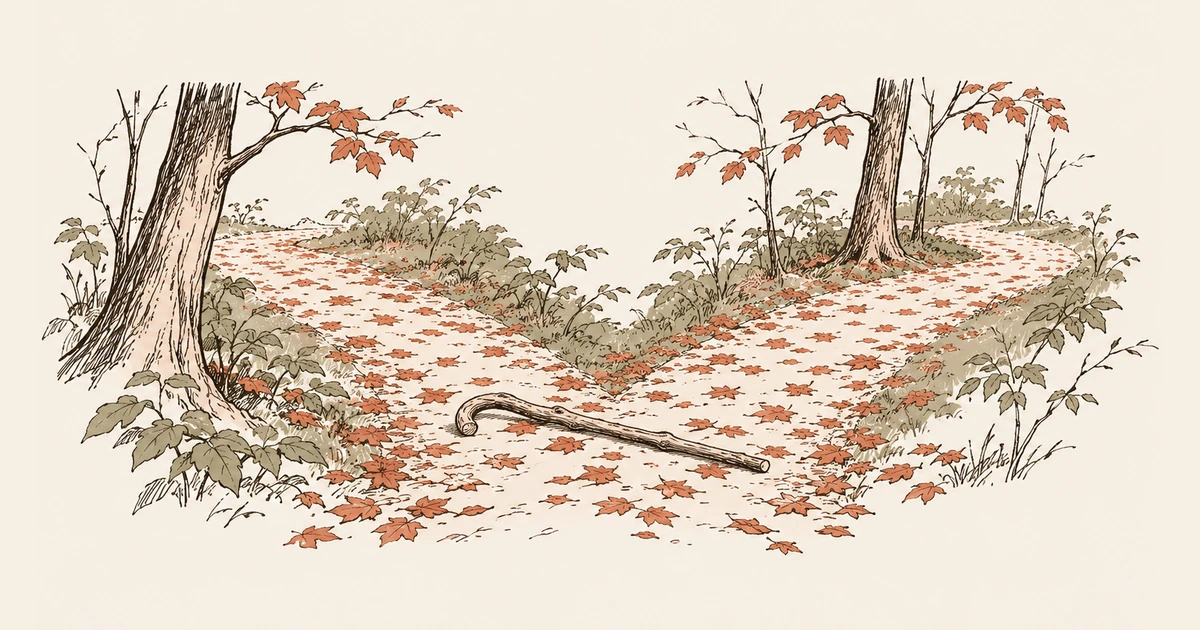
A traveler stands where a path forks in an autumn wood and looks down one way as far as he can. He takes the other, “as just as fair.” Then he corrects himself. The passing there, he says, “had worn them really about the same,” and that morning both lay equally in leaves “no step had trodden black.” By the poem’s own account, neither road was the less traveled one. [1]
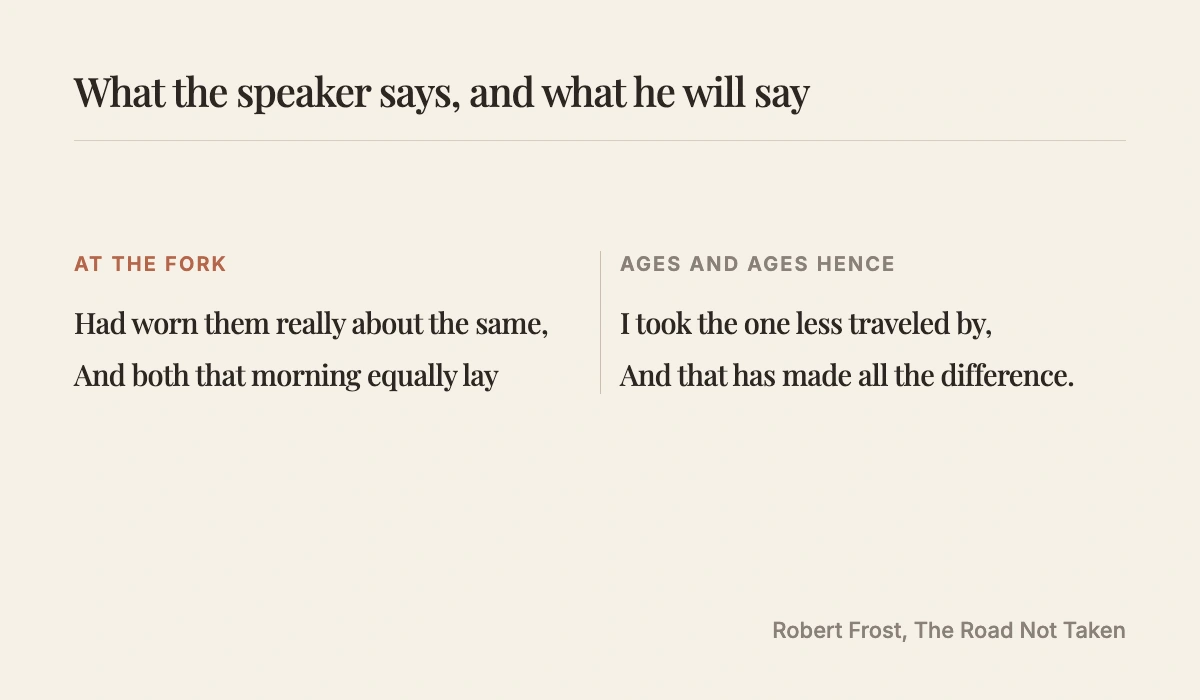
The last stanza changes tense. “I shall be telling this with a sigh / Somewhere ages and ages hence.” The speaker is forecasting how he will describe the moment when he is old: as a bold choice that made all the difference. The poem lets us watch him prepare that version. [1]
Where it came from
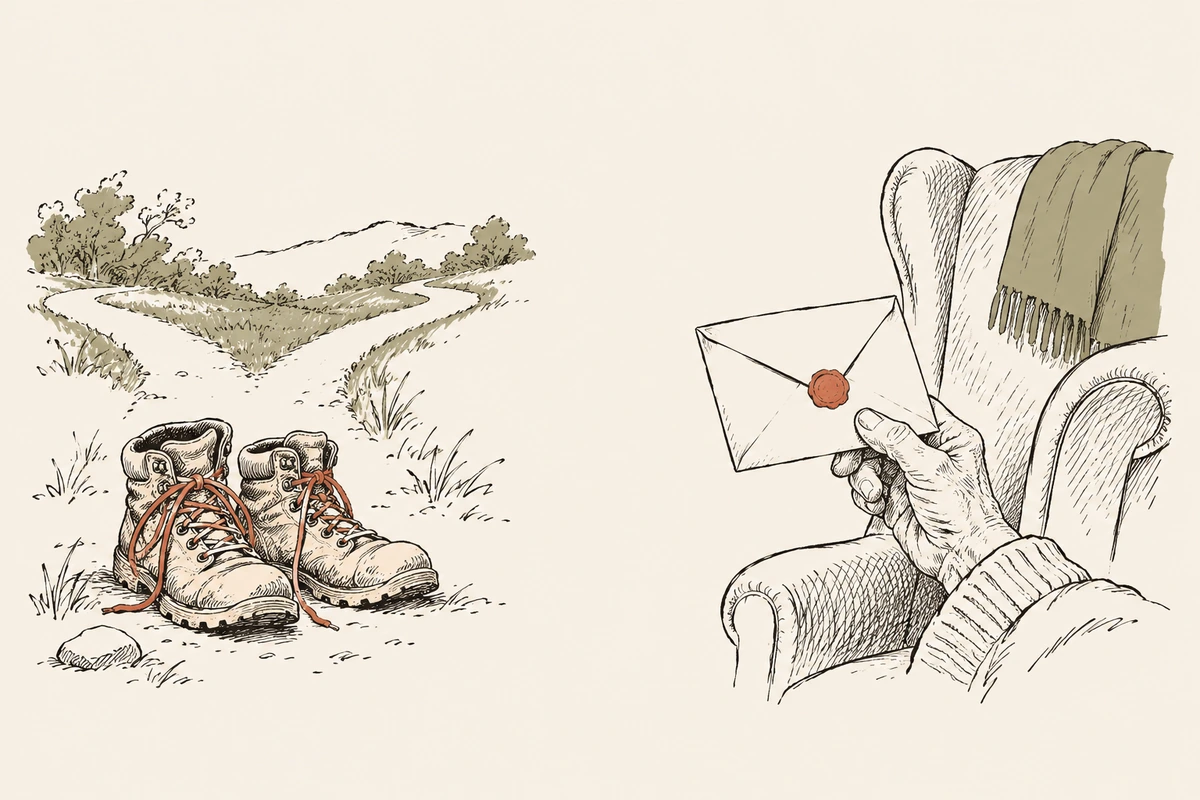
Frost wrote it with a friend in mind, the English writer Edward Thomas. On their walks, Thomas would agonize over which way to go and then regret the choice. Frost sent him the poem, then titled “Two Roads,” as a gentle joke. Thomas missed the joke and took it in earnest; the critic David Orr notes that it took several letters before he saw the poem’s “double games.” Thomas wrote back that the exchange “staggered me to think that perhaps I had always missed what made poetry poetry.” [2]
How it is usually used
In speeches and on posters, the last three lines stand alone and mean: be different, and it will pay off. Orr’s reading is that the poem holds both things at once, the proud story of the uncommon path and a quiet parody of it, and does not settle on either. That is harder to print on a mug, and more useful to anyone facing a real choice. [2]
Should you still quote it?
Our view: yes, but read the whole poem first. If you are choosing between two things that look equally good, the honest comfort in it is that they probably are, and that the meaning comes afterwards, from what you make of the one you took.