“We are what we repeatedly do. Excellence, then, is not an act but a habit” is often credited to Aristotle. The words are Will Durant’s. The American writer used them to sum up Aristotle in The Story of Philosophy in 1926. The idea is Aristotle’s, and the sentence is a popularizer’s very good compression of it. [1] [3]
The line, exactly
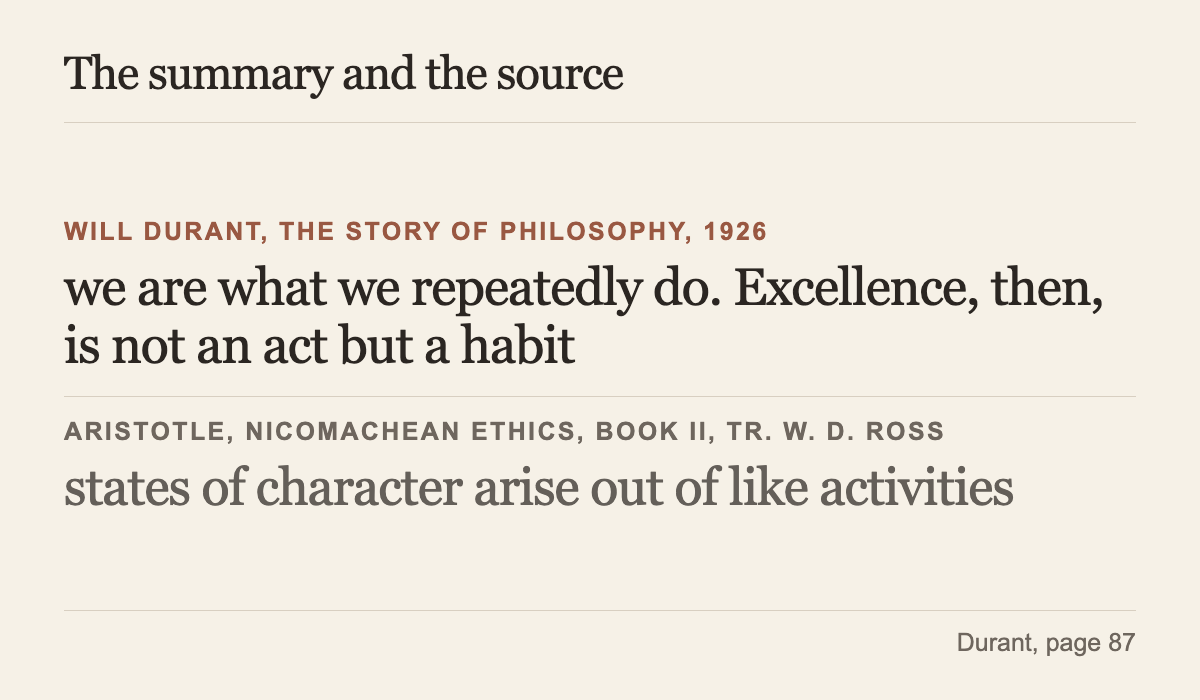
Excellence is an art won by training and habituation: we do not act rightly because we have virtue or excellence, but we rather have these because we have acted rightly; “these virtues are formed in man by his doing the actions”; we are what we repeatedly do. Excellence, then, is not an act but a habit…
Will Durant, The Story of Philosophy (Simon and Schuster, 1926), page 87. Look at the punctuation. The words Durant takes from Aristotle are inside quotation marks. The famous sentence is outside them. [1]
Where it sits in the book
The passage comes in Durant’s chapter on Aristotle, in the section on ethics and the nature of happiness. [3] He is explaining how a person acquires good character, and he moves in and out of quotation as he goes. The same sentence continues straight into another quotation from Aristotle. [1]

It is easy to see how the name transferred. Read quickly, or copied without its punctuation, the whole passage looks like Aristotle speaking. Wikiquote now lists the line under “Misattributed.” [3]
What Aristotle wrote
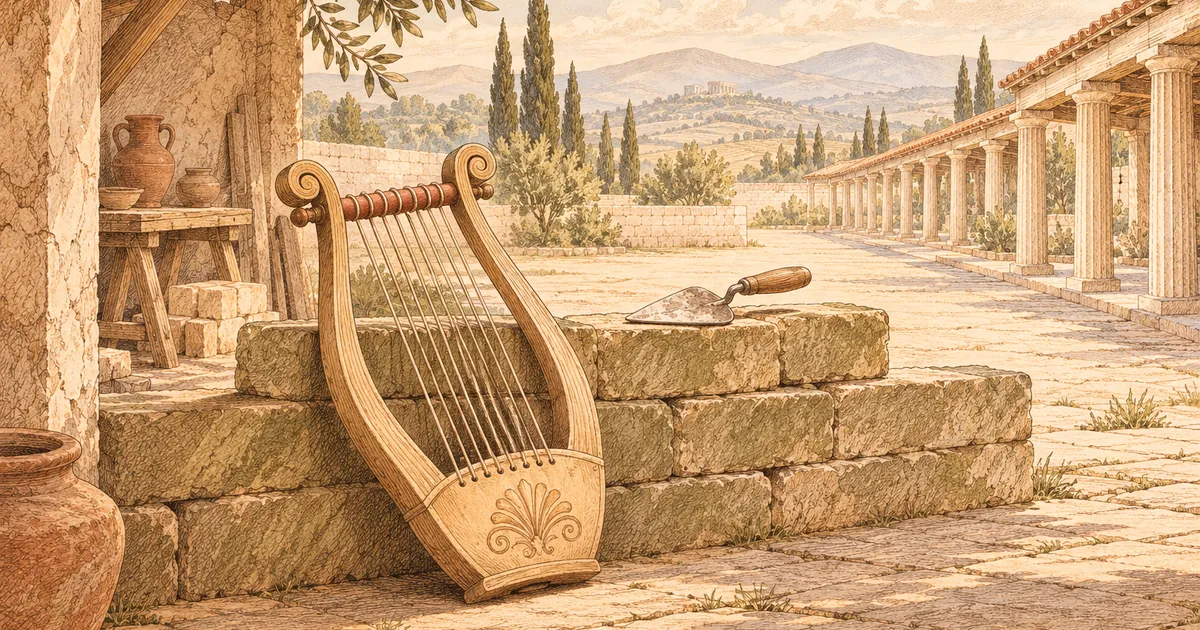
The source of the idea is Book II of the Nicomachean Ethics. Virtues, Aristotle says, are acquired the way crafts are: “men become builders by building and lyreplayers by playing the lyre; so too we become just by doing just acts, temperate by doing temperate acts, brave by doing brave acts.” [2]
He then draws the conclusion that Durant compressed: “states of character arise out of like activities.” And he says why it matters: “It makes no small difference, then, whether we form habits of one kind or of another from our very youth; it makes a very great difference, or rather all the difference.” [2]
How it is usually used
The line appears on gym walls and in books about routines, where “excellence” tends to mean high performance. Aristotle’s subject is narrower and more demanding. His examples are justice, temperance and courage. He is asking what kind of person your actions are turning you into, and the answer applies to bad habits as much as good ones.
Should you still quote it?
Our view: yes, and credit it properly. “Will Durant, summing up Aristotle” is accurate and gives both men their due. If you want Aristotle’s own words, “we become just by doing just acts” is short and says more.