
“Well-Behaved Women Seldom Make History”: The Author Meant It as a Complaint

By Luminora TeamPublished Updated Sources checked

From the team behind Luminora. How we write and check articles.

A hand-stitched olive diary tied with a terracotta ribbon opposite a thimble.
Original editorial illustration.

Published by the team that makes Luminora. Ulrich’s article is in copyright; we quote one line and summarise its opening as reproduced by Quote Investigator. The reading under “Should you still quote it?” is our editorial view.

“Well-behaved women seldom make history” is usually read as a cheer for rule-breakers. Its author, the historian Laurel Thatcher Ulrich, wrote it in 1976 as a regret: quiet, dutiful women had been left out of the history books, and her article set out to put some of them back. [1] [2]

The line, exactly

Well-behaved women seldom make history

Laurel Thatcher Ulrich, “Vertuous Women Found: New England Ministerial Literature, 1668-1735,” American Quarterly, 1976. The article is in copyright, so we quote only this line. It is often printed with “rarely” or “never”; she wrote “seldom.” [1]
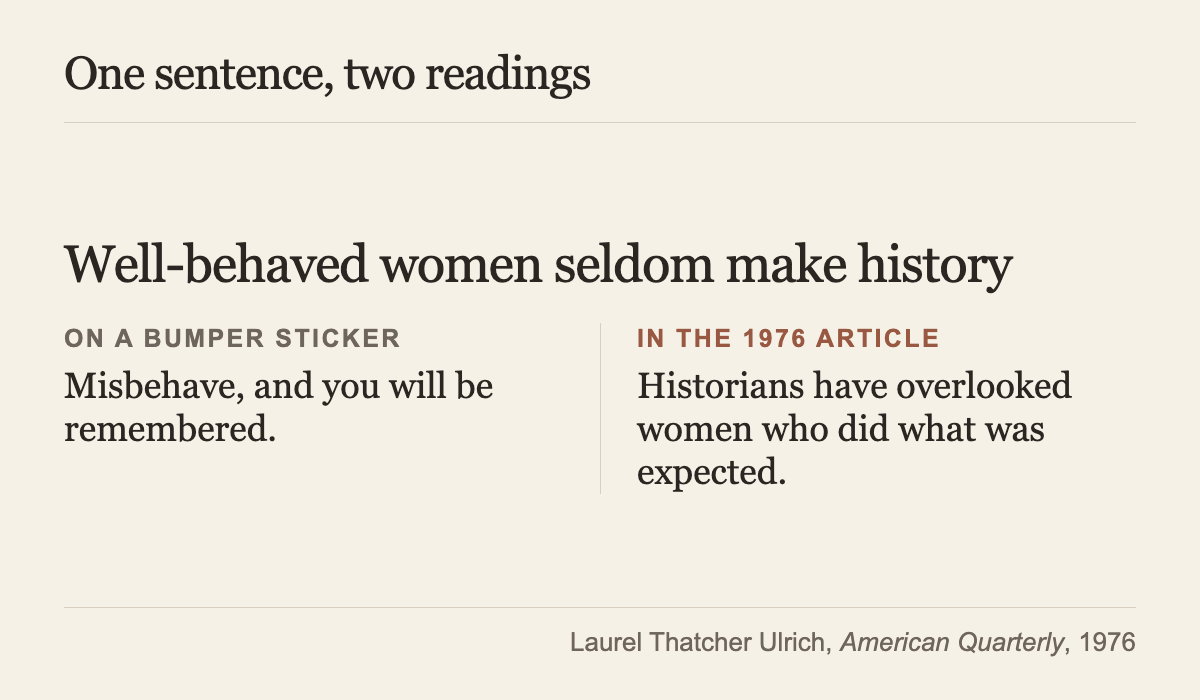
The line “Well-behaved women seldom make history” above two readings: on a bumper sticker, “Misbehave, and you will be remembered”; in the 1976 article, “Historians have overlooked women who did what was expected.”
The two lower statements are our summaries. Only the top line is Ulrich’s wording.

Where it sits

The article is about funeral sermons and other religious writing addressed to women in colonial New England. Its opening describes its subjects: women who never preached, voted or went to Harvard, who prayed in private and went to church even in the snow, and who never asked to be remembered. Cotton Mather, a minister of the time, called them “The Hidden Ones.” The famous sentence is Ulrich’s comment on what became of them. They were forgotten. [1]

In its place, then, the line is a diagnosis of history writing. Women who caused trouble left records and attracted historians. Women who did what was expected did not. Ulrich’s point was that the second group mattered and deserved study, and much of her later work, including a prize-winning book built on the diary of a Maine midwife, went on to do exactly that. [1]
A folded pamphlet with a blank cover and olive edge opposite a cotton bonnet with a terracotta tie.
Original editorial illustration.

How it escaped

The sentence left the journal and turned up on T-shirts, mugs and bumper stickers, usually without her name. “This phrase began in a scholarly context, and moved into popular culture,” Ulrich told the Harvard Gazette in 2007, the year she published a book that took the slogan as its title and its subject. [2]

The book looks at why women who act in unexpected ways are the ones remembered, and it argues against sorting women into good girls and bad girls at all. [2]

How it is usually used

On a mug the line means: behave badly and you will be remembered. That is a real and cheerful thought, and it is a different one. It moves the fault from historians, who were not looking, to the women, who were not loud enough. Ulrich’s sentence was written on behalf of the quiet ones.

Should you still quote it?

Our view: yes, both ways, as long as you know there are two. Read as she wrote it, it is a reminder to notice the people whose work leaves no monument. Read as a slogan, it is a dare. It is rare for an author to see a sentence turn around like that and answer it with a whole book.
Questions people ask

Who said “Well-behaved women seldom make history”?

The historian Laurel Thatcher Ulrich, in an article published in 1976. It is often wrongly credited to Marilyn Monroe, Eleanor Roosevelt and others. [1]

Did she mean women should misbehave?

No. Her article was about well-behaved women whom history had overlooked. She later wrote a book exploring how the phrase took on its second meaning. [1] [2]

Reading a line with its story

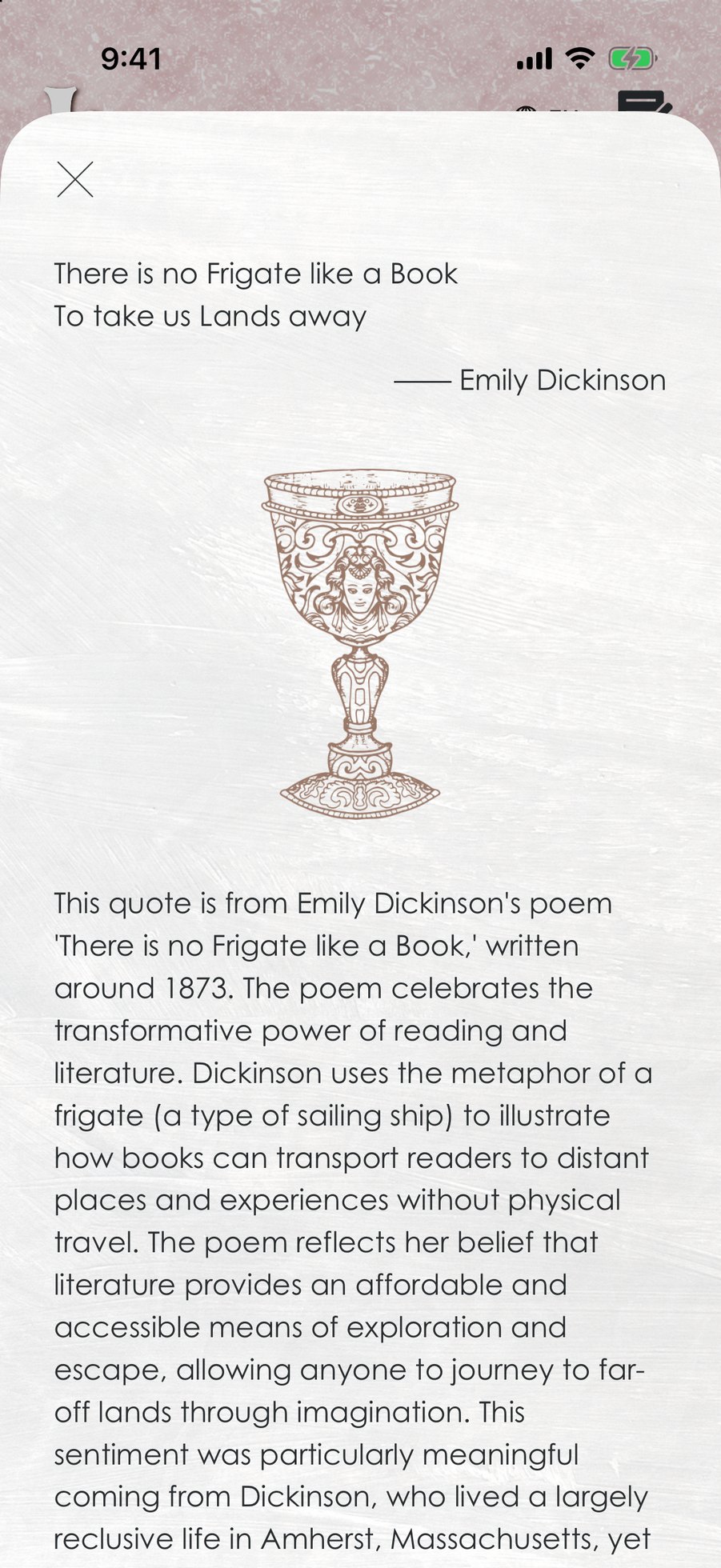
A quote changes when you know who said it and to whom. Luminora, the app we make, shows that for the literary quotes you read each day: tap Context to see the source of a line, the background, and a short biography of the author. See a real example of Context.

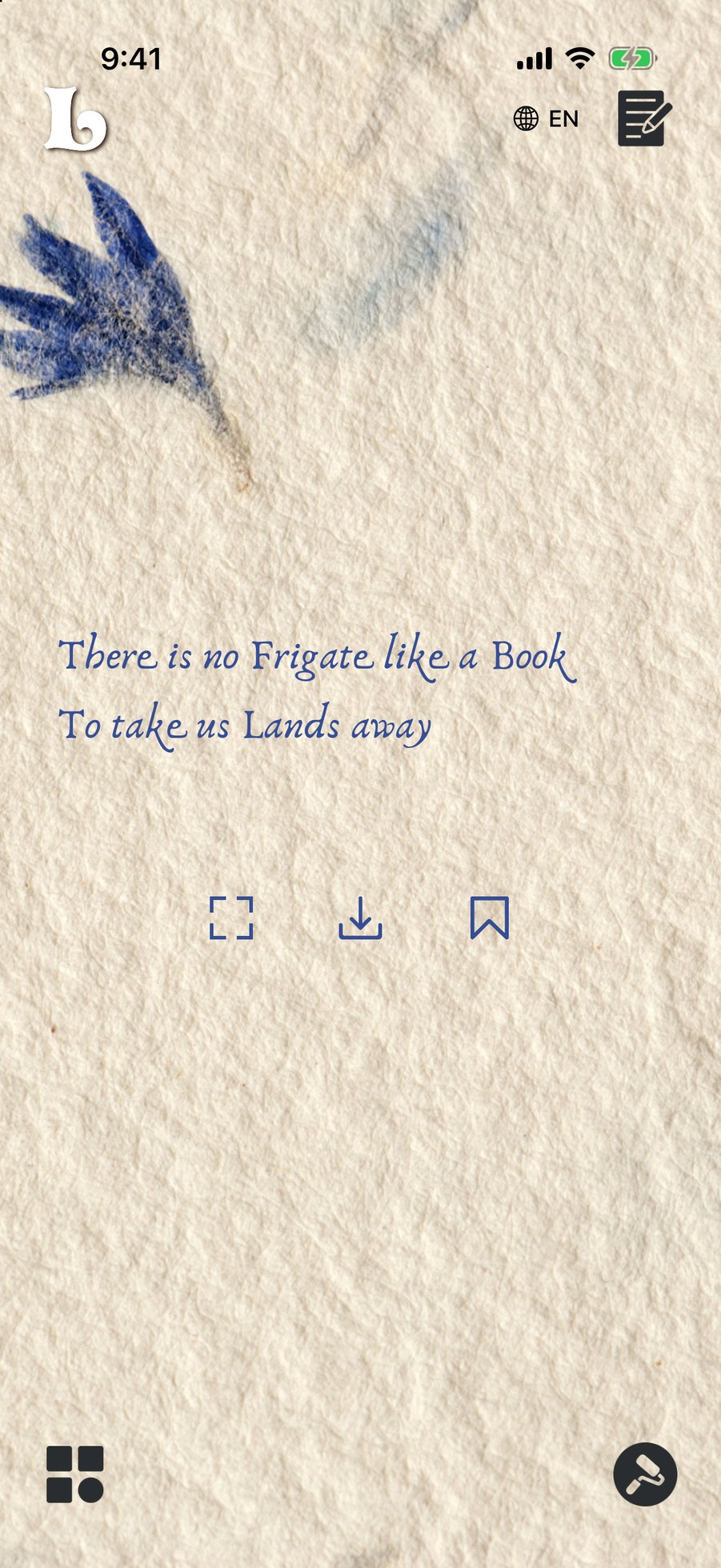
Luminora LEARN screen on a textured cream wallpaper with a pressed blue flower and the lines “There is no Frigate like a Book / To take us Lands away.”
Luminora Context screen for the same quote: attributed to Emily Dickinson, with an engraving of a goblet and a note dating the poem to around 1873.
A quote in LEARN. Its Context: the poem it comes from and when it was written. Shown here on a different quote. Source: Luminora on iPhone.

Questions readers also ask

Sources (2)

  1. “Well-Behaved Women Seldom Make History” · Quote Investigator · Quote research. Reproduces the opening of Ulrich’s 1976 article in American Quarterly and her 2007 remarks about the phrase.
  2. Amy Lavoie, “Ulrich explains that well-behaved women should make history” · The Harvard Gazette · 2007 article about Ulrich’s book on the phrase, with her comments.

Topics in this article: Quote origins · Reading · Misattributions