

“Money Is the Root of All Evil”: The Verse Says “the Love of Money”

By Luminora TeamPublished Updated Sources checked

From the team behind Luminora. How we write and check articles.

An open cloth purse, a heel of bread, a folded olive garment, and a copper-colored coin on a wooden table.
Original editorial illustration.

Published by the team that makes Luminora. Quotations are from the King James Version and the World English Bible, both in the public domain. The reading under “Should you still quote it?” is our editorial view.

“Money is the root of all evil” is a misquotation. The verse it comes from, 1 Timothy 6:10, says “the love of money is the root of all evil.” The target is wanting, and the lines before it are about being content with food and clothing. [1]

The line, exactly

For the love of money is the root of all evil: which while some coveted after, they have erred from the faith, and pierced themselves through with many sorrows.

1 Timothy 6:10, in the King James Version of 1611. The sentence does not stop at “evil.” It goes on to say what happens to the people who chase money: they wander off and hurt themselves. [1]
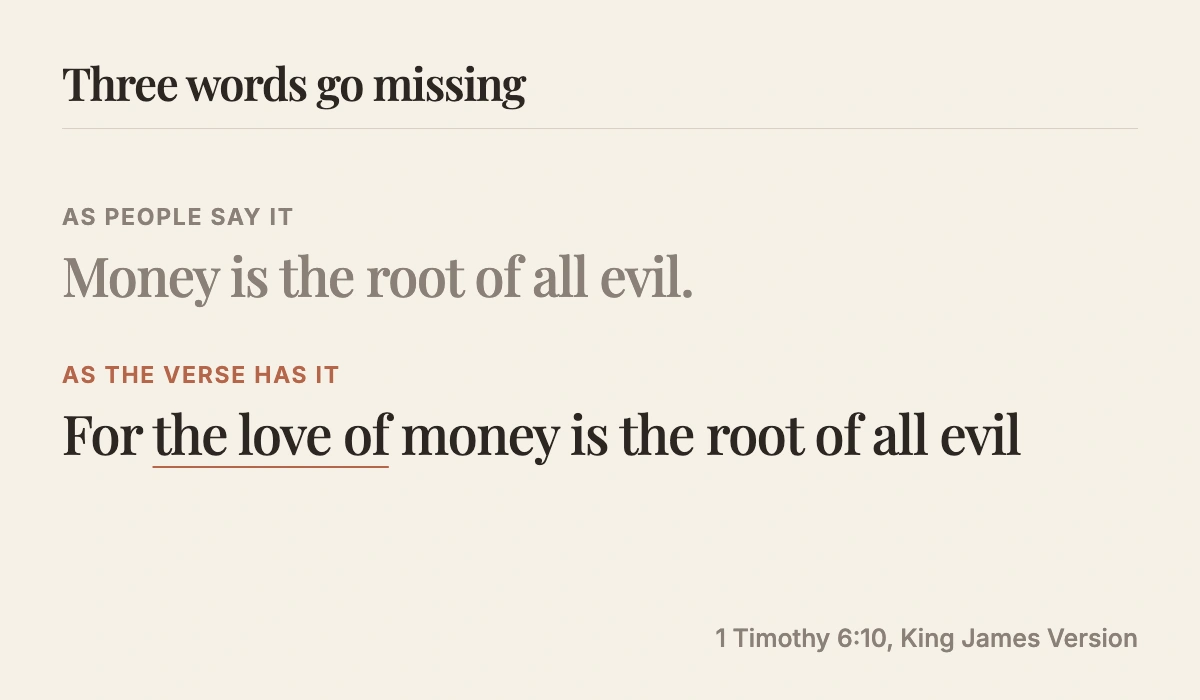
The saying “Money is the root of all evil” set above the verse “For the love of money is the root of all evil,” with the words “the love of” underlined.
The saying leaves out “the love of.”

Where it sits

First Timothy is a letter of advice to a younger church leader, traditionally attributed to the apostle Paul. This part of it is about teachers who treat religion as a way to get rich. The answer the letter gives is modest: “godliness with contentment is great gain.” We brought nothing into this world and can carry nothing out, so “having food and raiment let us be therewith content.” [1]

Then comes the warning: “they that will be rich fall into temptation and a snare.” The verse about the love of money follows directly, as the reason. The passage is about people who are set on becoming rich, and about what that wish does to them. [1]
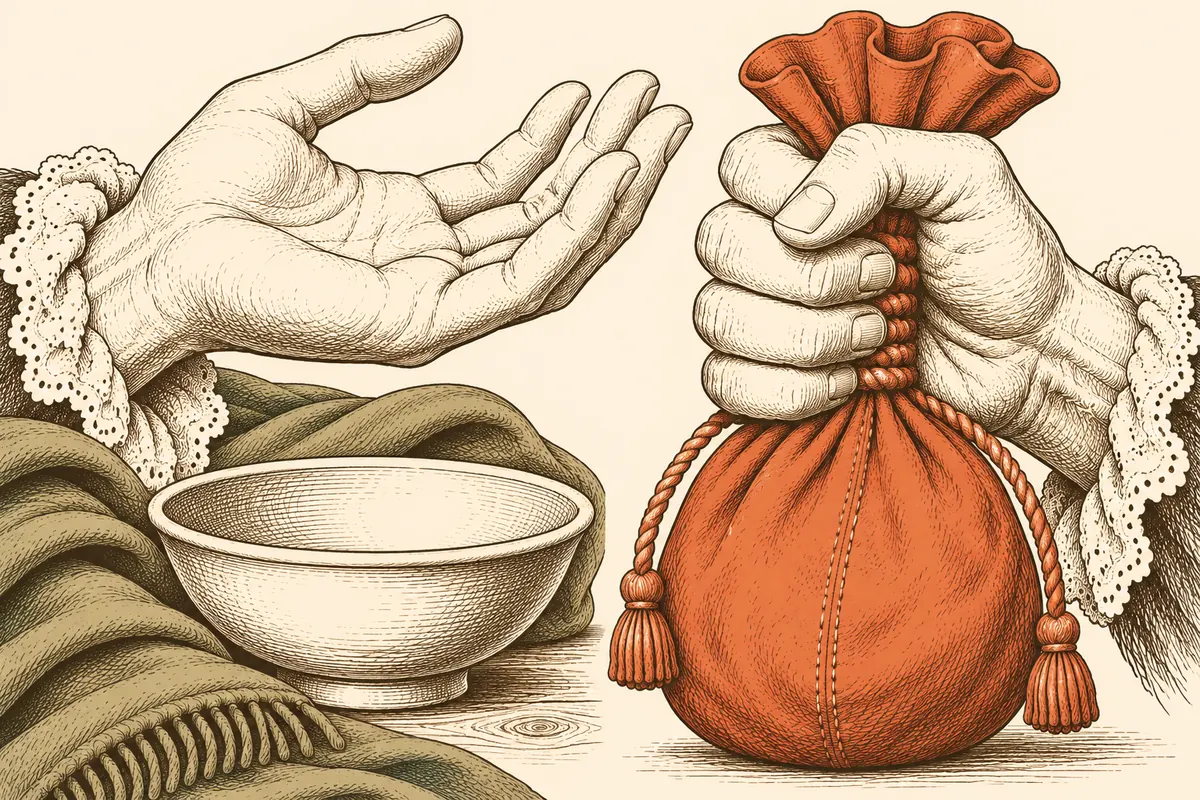
An open palm above a bowl and folded olive cloak, next to a fist clutching a full terracotta drawstring purse.
Original editorial illustration.

What it means there

In the Greek, “the love of money” is one word, philargyria, which a standard lexicon glosses as avarice. The verse names a state of mind. It says nothing against coins, wages or trade. [3]

Modern translations also soften the other half of the sentence. The World English Bible reads: “For the love of money is a root of all kinds of evil.” On that reading, greed is one source of many wrongs, and the verse makes no claim to explain every wrong there is. [2]

How it is usually used

Shortened to “money is the root of all evil,” the line becomes a verdict on money itself, and it is used that way both by people who distrust wealth and by people mocking them. The cut changes the subject of the sentence. The original is about a person’s attachment; the short form is about a thing.

Should you still quote it?

Our view: quote the verse, not the shorthand. “The love of money” is the more useful idea, because it applies to people with very little as much as to the rich, and it leaves room to earn a living without guilt.

Questions people ask

Does the Bible say money is evil?

Not in this verse. It says the love of money is a root of evil, in a passage that praises being content with enough. [1]

Where is the verse?

1 Timothy 6:10, in the New Testament. [1]

Reading a line with its story

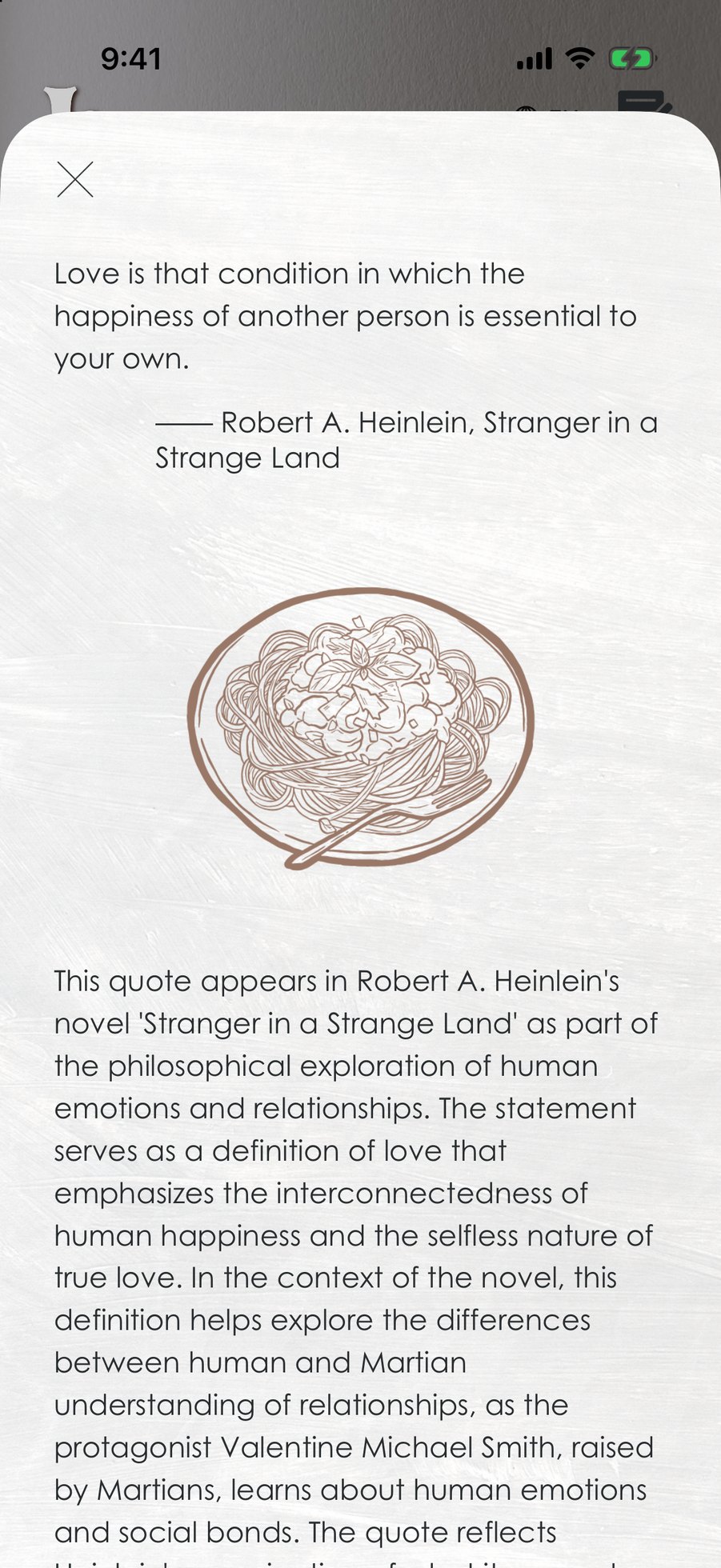
A quote changes when you know who said it and to whom. Luminora, the app we make, shows that for the literary quotes you read each day: tap Context to see the source of a line, the background, and a short biography of the author. See a real example of Context.

Luminora LEARN screen on a plain grey wallpaper with the line “Love is that condition in which the happiness of another person is essential to your own.”
Luminora Context screen for the same quote: attributed to Robert A. Heinlein, Stranger in a Strange Land, with an engraving of a plate of pasta and the start of the background note.
A quote in LEARN. Its Context: the book it comes from and how it is used there. Shown here on a different quote. Source: Luminora on iPhone.

Questions readers also ask

Sources (3)

  1. 1 Timothy, chapter 6 (King James Version) · Wikisource · Primary text in the 1611 King James translation, which is in the public domain.
  2. 1 Timothy, chapter 6 (World English Bible) · eBible.org · A modern public-domain translation, quoted for comparison.
  3. Strong’s G5365, philargyria · Blue Letter Bible · Lexicon entry for the Greek word translated “love of money.”

Topics in this article: Quote origins · Reading · Misquotes