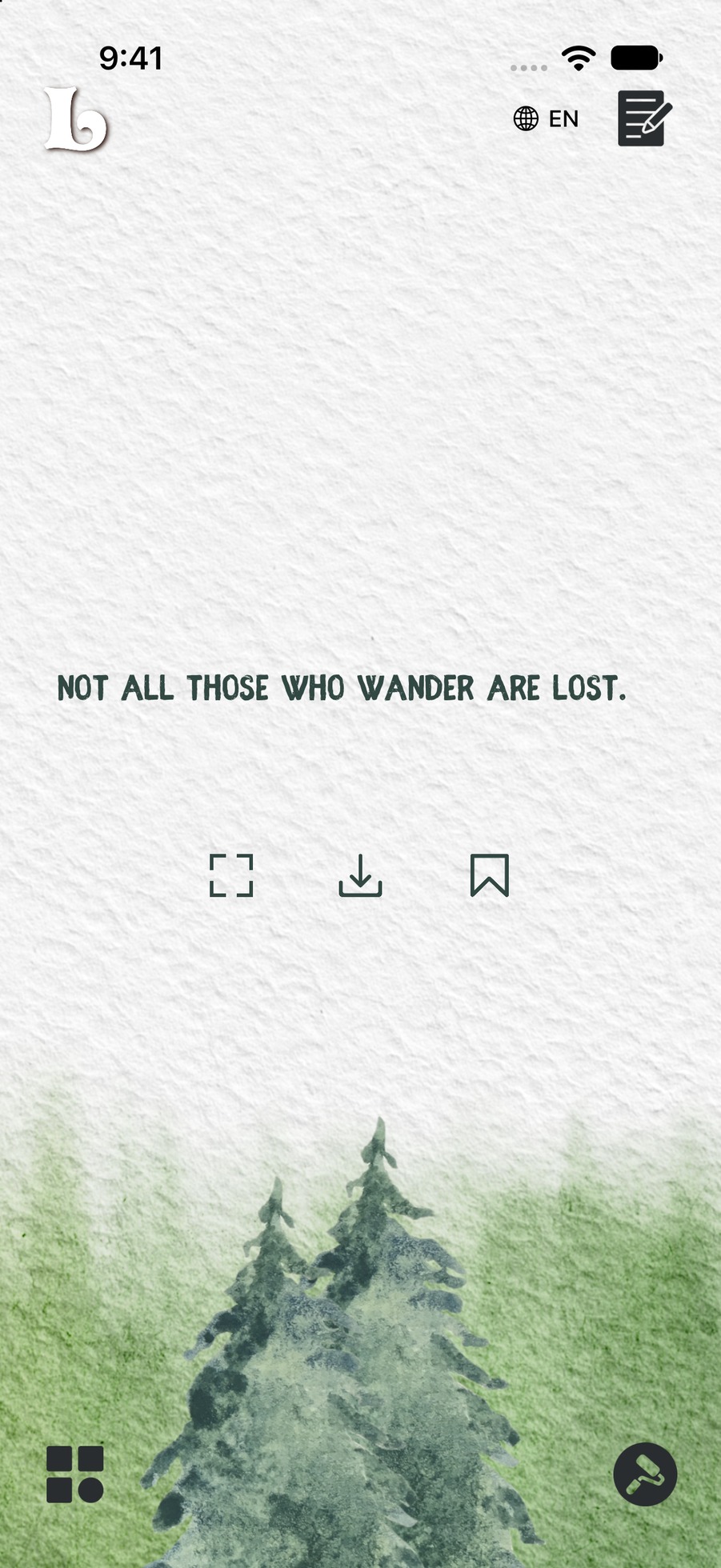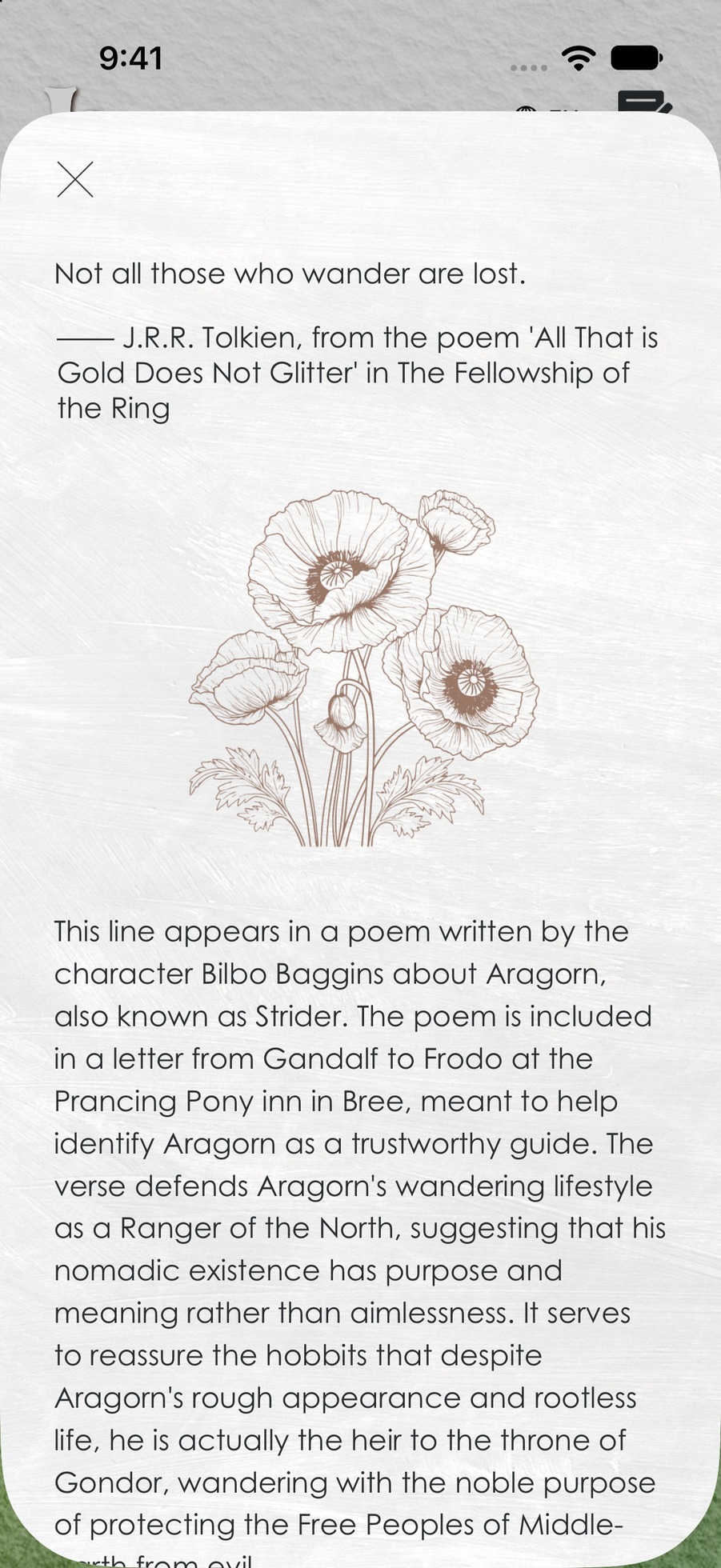
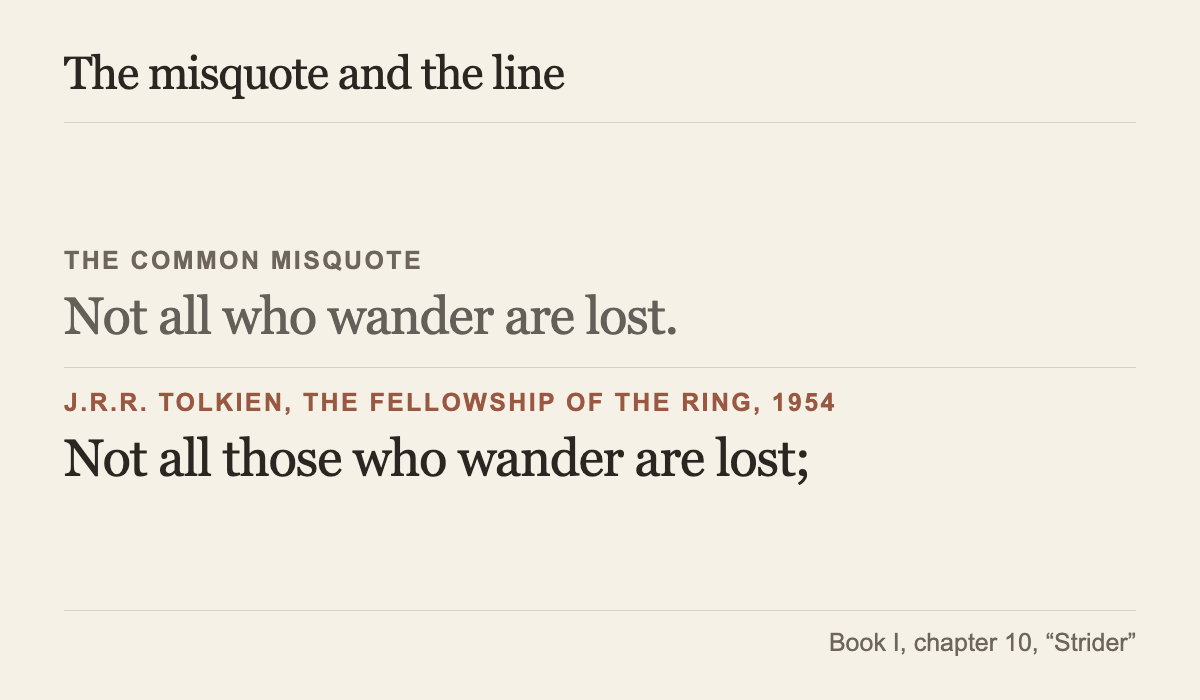
“Not all those who wander are lost” is a line from a short poem about Aragorn in J.R.R. Tolkien’s The Fellowship of the Ring (1954). Aragorn roams the wild as a Ranger called Strider and is in fact the rightful king. The popular version, “Not all who wander are lost,” drops “those.” [1] [2] [4]
The line, exactly
Not all those who wander are lost;
J.R.R. Tolkien, The Fellowship of the Ring, Book I, chapter 10, “Strider.” It is the second line of an eight-line poem often called the Riddle of Strider. The book is in copyright, so we quote this one line. [2] [4]
Where it sits
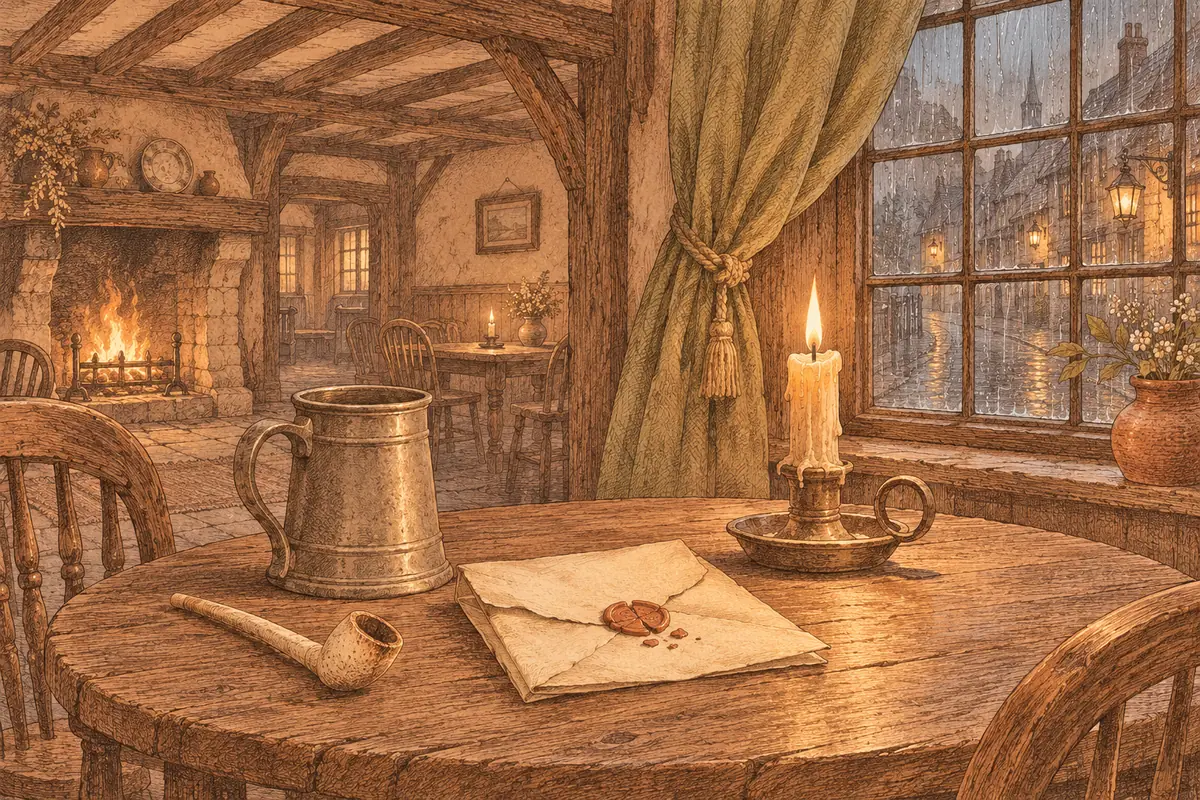
Frodo and his companions reach the inn at Bree expecting to meet Gandalf, who is not there. The innkeeper hands Frodo a letter Gandalf wrote three months earlier, which tells him he can trust a Ranger called Strider. [3] The poem is in that letter. It describes Strider as a riddle would: what looks shabby may be precious, and a wanderer may know exactly where he is going.
At the Council of Elrond, in Book II, Strider is revealed as Aragorn, the heir of Isildur. [3] Bilbo recites the poem there, and tells Frodo he wrote it himself, for Aragorn, long before.
What it means there
The poem opens by turning round a proverb that Shakespeare put in The Merchant of Venice: “All that glisters is not gold.” [5] Shakespeare’s version warns that a bright surface can hide something worthless. Tolkien’s says the reverse: real worth can look plain. The scholar Judith Kollman reads the reversal as a private joke, applied to the book’s hero. [2]
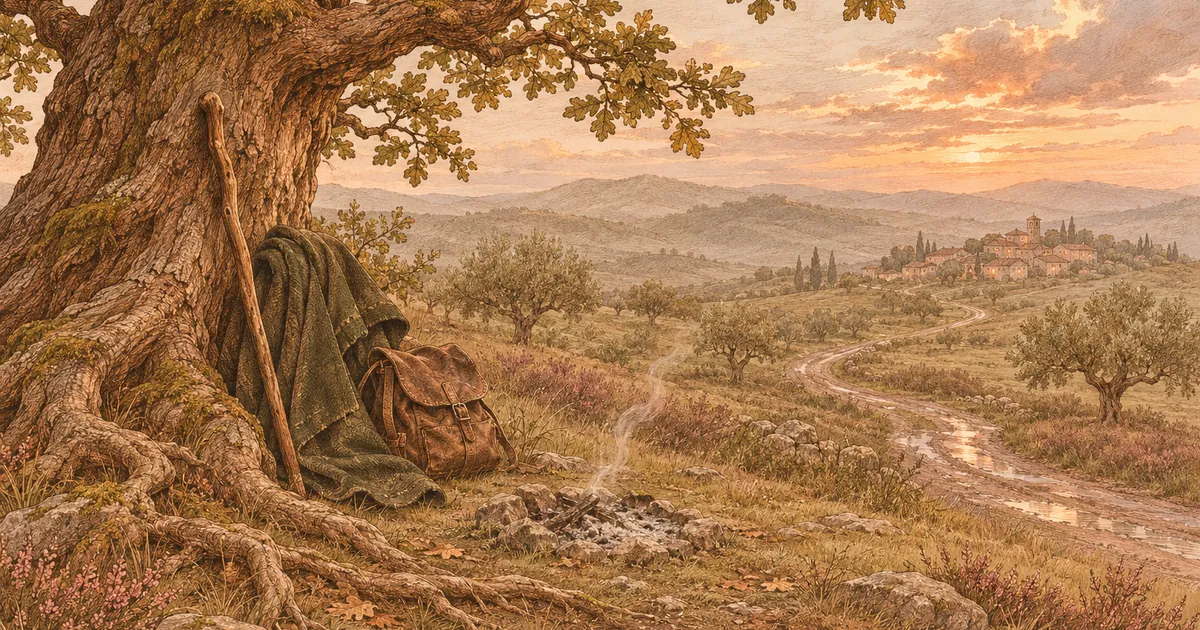
So the wandering in the line is Aragorn’s. Strider, “secretly the rightful king of Gondor, appears to be a mere Ranger,” as one summary puts it. [4] “Lost” here means aimless, and the line says he is not. He travels the wild for a reason the hobbits cannot yet see.
How it is usually used
Today the line is a travel motto, on tattoos, mugs and gap-year posts, usually as “Not all who wander are lost.” Read that way, it defends wandering for its own sake. Tolkien’s line makes a narrower claim: it defends a wanderer whose purpose others cannot see. Both readings warn against judging people by how they look. The popular one leaves out that the wanderer in the poem knows where he is going.
Dropping “those” barely changes the sense. It is still not what Tolkien wrote.
Should you still quote it?
Our view: yes, in Tolkien’s words. Keep “those.” If you use it to mean that drifting is fine, know that the poem means something more pointed: a purpose can be invisible from outside.