
“Let Them Eat Cake”: The Story Is Older Than Marie Antoinette

By Luminora TeamPublished Updated Sources checked

From the team behind Luminora. How we write and check articles.

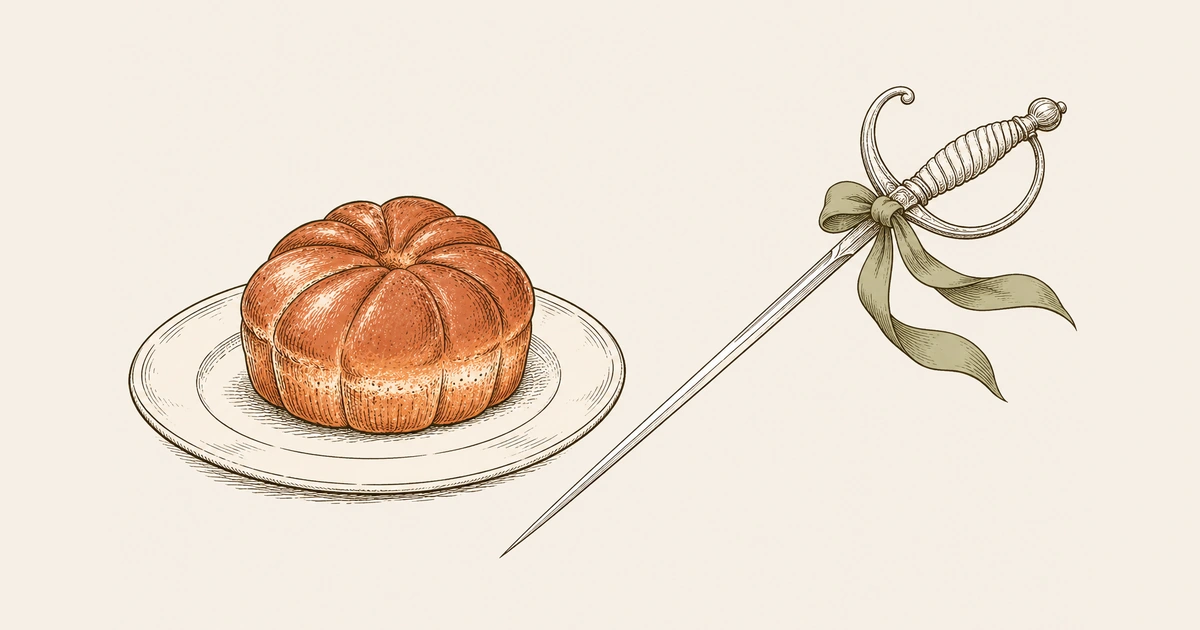
A terracotta bun on a plain plate opposite a dress sword tied with an olive ribbon.
Original editorial illustration.

Published by the team that makes Luminora. The quotation is from a public-domain English translation; other translations word it differently. The reading under “Should you still quote it?” is our editorial view.

“Let them eat cake” is the most famous thing Marie Antoinette never said. The story appears in Rousseau’s Confessions, told about “a great princess” he does not name, and he wrote it when Marie Antoinette was about ten years old. Historians say the tale had already been told about other royal women. [1] [2]

The line, exactly

At length I recollected the thoughtless saying of a great princess, who, on being informed that the country people had no bread, replied, “Then let them eat pastry!”

Jean-Jacques Rousseau, The Confessions, Book VI, in the English translation printed for the Aldus Society in 1903. This translator says “pastry” where the familiar version says “cake.” [1]
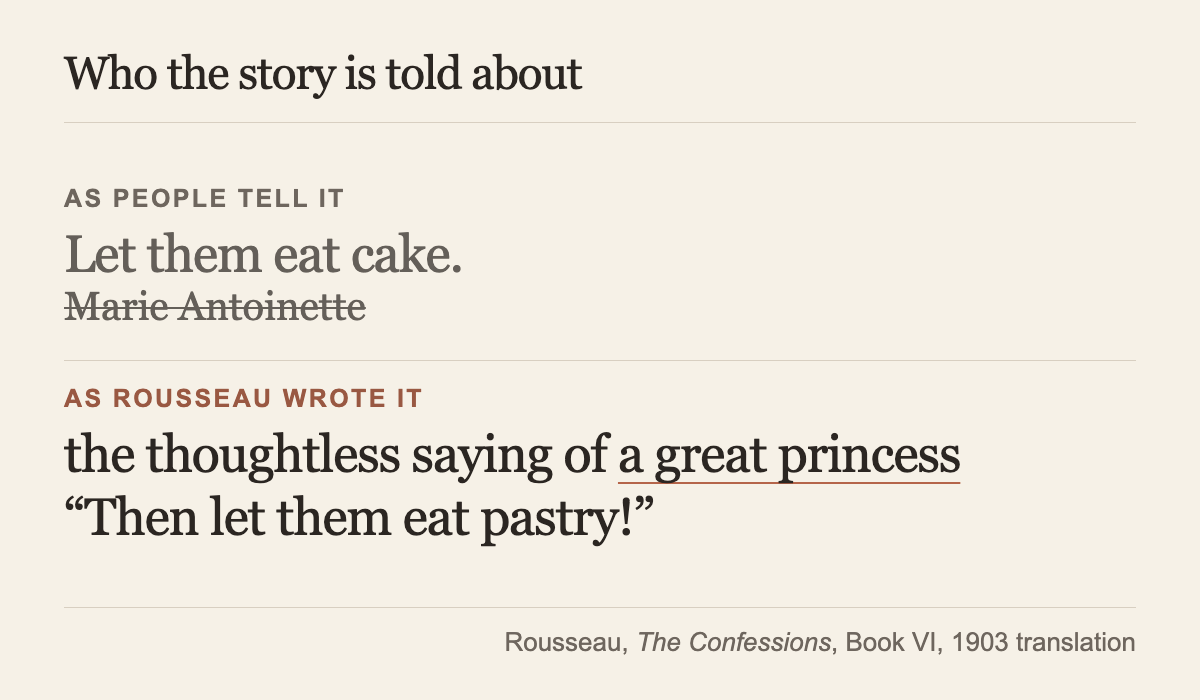
The saying “Let them eat cake” with the name Marie Antoinette struck through, above Rousseau’s words “the thoughtless saying of a great princess” and “Then let them eat pastry!”
Rousseau names no one: “a great princess.”

Where it sits in the book

The passage is a small comic confession. As a young man living in a wealthy household, Rousseau had got hold of some wine and liked to drink it in his room. But he could not drink without eating, and he was too proud to be seen buying bread: “how could a fine gentleman, with a sword at his side, enter a baker’s shop to buy a small loaf of bread?” [1]

That is when the princess comes to mind. He takes her advice literally and goes looking for a pastry shop instead, walking past thirty of them before he dares go into one. The saying is a remembered anecdote, something he had heard, and he uses it as a joke against himself. [1]
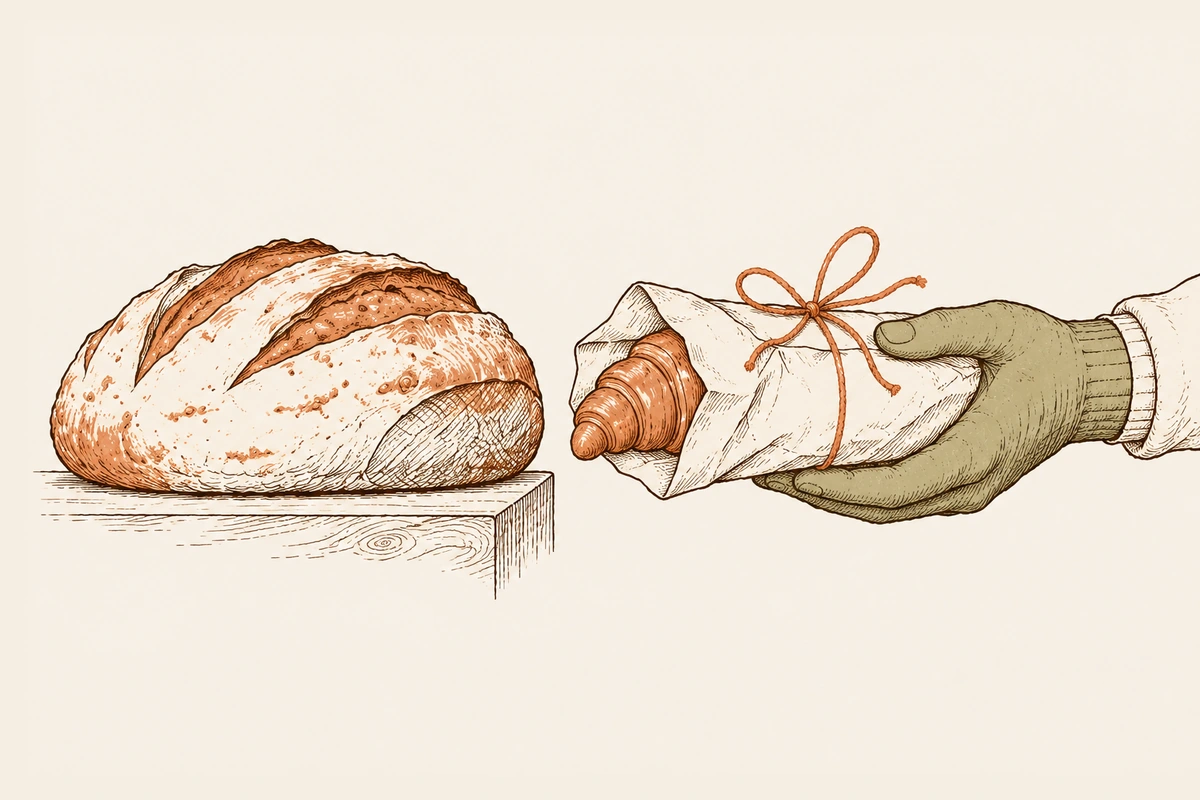
A loaf on the edge of a counter opposite an olive-gloved hand holding a paper-wrapped pastry tied with terracotta string.
Original editorial illustration.

Why it cannot be Marie Antoinette

Rousseau names nobody. History’s account dates his telling to the mid-1760s, when Marie Antoinette was about ten, three years from marrying the French prince and eight from becoming queen. And the tale was already old: it was first told, in a slightly different form, about Marie-Thérèse, the Spanish princess who married Louis XIV in 1660, and over the next century it was attached to several other royal women. [2]

Her biographer Antonia Fraser adds an argument from character: the remark would have been out of keeping with a woman who gave generously to charity. [2]

How it is usually used

The line is shorthand for a ruler so cut off from ordinary life that hunger looks like a menu problem. It is used of politicians, executives and anyone caught saying something tone-deaf about money. As a type it works. As history it puts the words in the mouth of one particular woman, who was later executed, on no evidence.

Should you still quote it?

Our view: use the phrase, drop the name. “A ‘let them eat cake’ moment” says what you mean. “As Marie Antoinette said” repeats an old piece of mud. The more interesting fact is that the story kept being reattached to whichever royal woman was unpopular at the time.
Questions people ask

Did Marie Antoinette say “Let them eat cake”?

There is no evidence that she did. The story was in circulation before she came to France, and Rousseau tells it about an unnamed princess. [2]

Who said it first?

Nobody knows. Rousseau presents it as a saying he remembered, and an earlier version was told about Marie-Thérèse, wife of Louis XIV. [1] [2]

Reading a line with its story

A quote changes when you know who said it and to whom. Luminora, the app we make, shows that for the literary quotes you read each day: tap Context to see the source of a line, the background, and a short biography of the author. See a real example of Context.

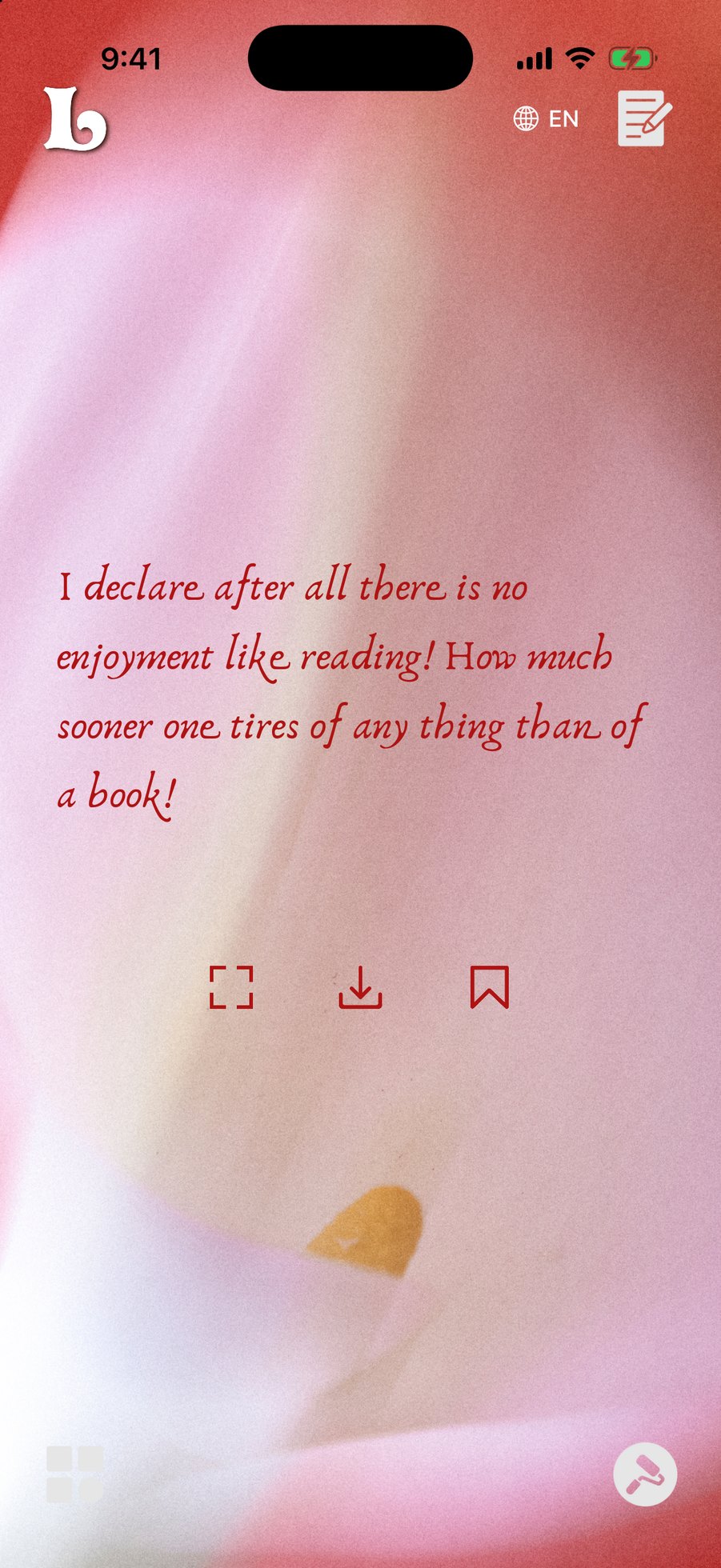
Luminora LEARN screen on a soft pink petal wallpaper with the line “I declare after all there is no enjoyment like reading! How much sooner one tires of any thing than of a book!”
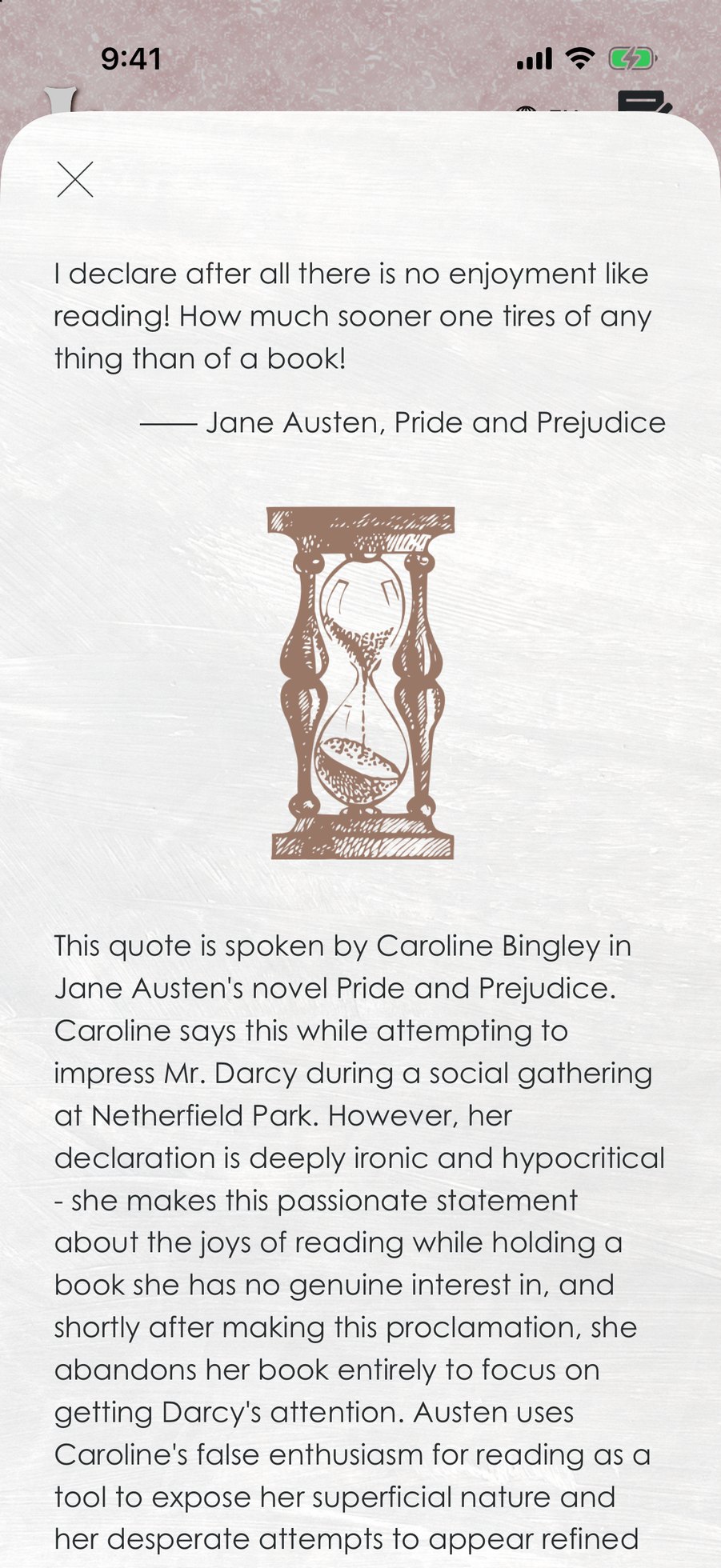
Luminora Context screen for the same quote: attributed to Jane Austen, Pride and Prejudice, with an engraving of an hourglass and a note saying the line is spoken by Caroline Bingley while trying to impress Mr. Darcy.
A quote in LEARN. Its Context says who is speaking and why. Shown here on a different quote. Source: Luminora on iPhone.

Questions readers also ask

Sources (2)

  1. Jean-Jacques Rousseau, The Confessions, Book VI (English translation printed for the Aldus Society, London, 1903) · Project Gutenberg · Primary text in an English translation that is in the public domain.
  2. “Did Marie-Antoinette Really Say ‘Let Them Eat Cake’?” · History, A&E Television Networks · Secondary account. Source for the earlier versions of the story, the dating and Antonia Fraser’s view.

Topics in this article: Quote origins · Reading · Misattributions